
PPWR regulation: what changes for importers of packaged goods
FRIDAY, 27 NOVEMBER 2026
Since 12 August 2026 importers of packed goods must check packaging compliance, print their name and address and keep documents for 5 or 10 years; under their own brand they become the manufacturer.
The PPWR regulation, Regulation (EU) 2025/40 on packaging and packaging waste, has applied since 12 August 2026 and also covers companies importing goods that are already packed. For an importer in Europe the main change is this: before selling, it must check that the packaging complies, that an EU declaration of conformity exists and that its own name and address appear on the pack.
PPWR regulation: what it is and when it applies
The regulation entered into force on 11 February 2025 and from 12 August 2026 replaces Directive 94/62/EC, which had governed packaging in Europe since 1994. The difference is one of method: a directive has to be transposed by each member state through its own laws, while a regulation applies as it stands across the whole Union. The rules are therefore the same in Milan, Rotterdam and Warsaw.
The text treats packaging as a product with its own requirements: permitted substances, recyclability, recycled content, minimisation, reuse and labelling. As with CE marking, whoever places it on the market must show that it complies. At the end of March 2026 the European Commission published a guidance document with frequently asked questions, which clarifies who does what along the supply chain.
The PPWR does not replace national rules on packaging fees: in Italy, the declaration to CONAI for imported packaging remains a separate obligation, covered in a dedicated guide.
The dates to put in the diary
Not everything starts at once. The documentation and substance rules began on 12 August 2026; design requirements arrive in stages up to 2038.
- 12 August 2026: the regulation, the EU declaration of conformity and the PFAS limits for food contact packaging apply.
- 12 August 2028: harmonised material composition label on all packaging, or 24 months after the implementing acts if these come later.
- 1 January 2030: only packaging designed for recycling, with minimum recycled content for plastic and a maximum empty space of 50% in grouped, transport and e-commerce packaging.
- 1 January 2035: packaging must be recyclable at scale.
- 1 January 2038: only packaging in recyclability grades A or B remains on the market.
Manufacturer, importer or distributor: which role you have
Obligations depend on the role, and the same company can have a different role for each product line. The manufacturer is whoever makes the packaging or the packaged product, but also whoever has it designed or made by others and sells it under its own name or trademark. In the supply chain there is only one manufacturer.
The importer is whoever, established in the Union, places packaging from a third country on the European market. The distributor is anyone else who makes it available without modifying it and without its own brand.
The point that matters most to companies buying in China is the change of role. If an importer places goods on the market under its own name or trademark, or modifies the packaging in a way that may affect compliance, it becomes the manufacturer and takes on all the manufacturer's obligations. A company that has printed boxes carrying its brand made in Asia is therefore, under the PPWR, the manufacturer of that packaging, even if it never handled it.
The importer's obligations
Article 18 of the regulation lists what an importer that is not the manufacturer must do. It may place on the market only packaging that meets the requirements of Articles 5 to 12, and before doing so it must make sure of four things: that the manufacturer has carried out the conformity assessment and drawn up the technical documentation, that the packaging bears the required label, that it comes with the required documents and that the manufacturer has met its own identification obligations. If it has doubts about compliance, it must not place the goods on the market.
Then come the visible obligations. The packaging must show the importer's name, registered trade name or registered trademark and postal address; only where this is not possible does the information move to a digital data carrier or an accompanying document. Storage and transport conditions under its responsibility must not jeopardise compliance.
Finally, the documentation and response duties. The importer keeps a copy of the EU declaration of conformity available to market surveillance authorities and ensures the technical documentation can be provided for 5 years for single-use packaging and 10 years for reusable packaging. On a reasoned request it must hand it over within 10 days. If it suspects non-compliance it must act immediately, withdraw or recall the packaging where needed and inform the authorities.
EU declaration of conformity and technical documentation
The conformity assessment is governed by Article 38 and Annex VII, which lists the content of the technical documentation; the EU declaration of conformity follows Article 39 and the model in Annex VIII. Both are the manufacturer's responsibility. The assessment covers the packaging as a whole and there is no mandatory electronic format.
For companies importing under their own brand this is the most demanding part, because the information sits in the factory: materials of each component, inks, adhesives, coatings, weight and volume. It is worth asking the supplier for a materials sheet for each pack and the relevant test reports at quotation stage, not after shipment, and setting out in the contract who is liable if the data turn out to be wrong.
PFAS and heavy metals: the limits already in force
Since 12 August 2026 packaging intended for contact with food may not contain PFAS, the per- and polyfluoroalkyl substances used to make paper and board resistant to grease and water, above three thresholds:
25 parts per billion for any single PFAS measured by targeted analysis, 250 parts per billion for the sum of PFAS measured, and 50 milligrams per kilogram of total fluorine, which also includes polymeric PFAS.
For all packaging, not only food packaging, the combined content of lead, cadmium, mercury and hexavalent chromium may not exceed 100 milligrams per kilogram. Paper lunch boxes, bags and food boxes made in Asia are the cases where a test report from an accredited laboratory becomes the document to ask for before confirming the order.
Recyclability, recycled content and labelling
From 2030 recyclability becomes a condition for market access: packaging will be classified in performance grades from A to E and packaging below the minimum threshold may not be sold; from 2038 only grades A and B will remain. Also from 2030, plastic packaging will have to contain a minimum share of post-consumer recycled material, with higher thresholds from 2040, and certain single-use plastic formats listed in Annex V will be banned.
From 12 August 2028 all packaging will have to carry a harmonised label with its material composition, to help consumers sort waste; the format will be set by the Commission through implementing acts. The reuse targets for transport packaging and the empty space limit are covered in a dedicated article.
The timetable suggests that packaging designed today, for products that will stay in the catalogue for several years, should already be planned for 2030: a box with a glued plastic window or a paper bag laminated with plastic film are the formats for which it is worth asking the supplier for an alternative.
Worked example: three product lines imported from China
Take a hypothetical case. A European company imports three product lines from China: steel water bottles in a printed carton box carrying its own brand, ceramic mugs in a plain unbranded box, and paper lunch containers, also under its own brand. Each line arrives in 4 shipments a year, 12 in total.
For the bottles and the lunch containers the company is the manufacturer: it must hold the technical documentation and sign the EU declaration of conformity for both packs. For the mugs it is the importer: it must check that the manufacturer has done its part, have its own name and address printed on the box and keep the copy of the declaration. Only the lunch containers are in contact with food and require PFAS testing; assuming 3 tests a year at 400 euro each, the cost is 1,200 euro, against an order that could not be sold without the test report. For a shipment in October 2026 in single-use packaging, the documents must be kept at least until October 2031.
To sum up the steps:
- Map the role for each line: under your own brand you are the manufacturer, without a brand you are the importer.
- Ask the supplier for the materials sheet of each pack and, for food contact, the PFAS test report.
- Prepare or collect the EU declaration of conformity and the technical documentation, to be kept 5 years for single-use and 10 for reusable packaging.
- Have the importer's name, brand and postal address printed on the packaging.
- Review the artwork for the harmonised label by 2028 and poorly recyclable materials by 2030.
With La Merce, an order imported after 12 August 2026 arrives with the importer's name and address already printed on the box at the factory, the materials sheet collected before shipment and the PFAS test report for every container intended for food.
Sources
Independent checks on the figures cited, verified in-house.
- Commissione europea — Packaging waste
- lxgesetze — Art. 18 PPWR, Pflichten der Importeure
- Edotto — Imballaggi, dal 12 agosto 2026 nuovi obblighi di conformità con il Regolamento PPWR
- Packaging Law — European Commission publishes final PPWR guidance in advance of August 2026 application date
- Latham & Watkins — European Packaging and Packaging Waste Regulation: summary of provisions and new guidance
- Bryan Cave Leighton Paisner — New EU packaging rules are now in force: is your business compliant?
- Coolset — PPWR compliance for importers and distributors: a step-by-step guide
Read related articles

EU toy safety regulation 2025/2509: importer obligations and what changes
WEEE registration in Italy: who must register, costs and importer obligations

RoHS directive: what it is, restricted substances and importer obligations

Textile labelling regulation: EU rules, fibre composition and penalties

AQL inspection: how to read the table, inspection levels and acceptance numbers
Food contact materials regulation: rules, declaration of compliance and symbol

GPSR regulation: importer obligations, the responsible person and penalties in Italy
REACH regulation: what it is, importer obligations, restrictions and penalties

Italy labeling requirements: 337,000 Halloween items seized in Brescia
Counterfeit goods seized in Italy: over 5 million items in 2025, toys top the list

How to get CE marking: the steps and the importer's obligations
China's battery plan: parts-per-billion defects by 2030
Transport packaging rules and the PPWR: 40% reusable by 2030
Costume jewellery imported from China: 49,512 items stopped in Genoa
Container inspections: deficiencies in more than one unit in ten

Lithium batteries in containers: thousands travel undeclared

SVHC substances and importer obligations: the list rises to 253 entries
Supplier assessment: only those meeting the highest standards of quality, safety and sustainability
Fake made in Italy: 71,000 go-kart items seized at La Spezia
EU trade deficit with China: imports reach EUR 163 billion in the third quarter

Inward processing relief: how it works and when it pays off for processing non-EU goods

UNCTAD Review of Maritime Transport 2026: seaborne trade stalls, Hormuz -95%

US tariffs on EU goods: 15% ceiling proposed, hearings from 25 January

Customs representative: direct or indirect, who is liable for duties and VAT

Paying Chinese suppliers in RMB: goods settled in yuan up 19.6% in nine months
Chinese hybrid cars: EU import quotas from 1 December, 191,780 in 200 days
Made in Italy label: when you can use it and what importers risk
EU ETS transhipment ports: Damietta and Abu Qir added from 10 December

Temu EU import duty: Italian visits down 71% in a year
Leapmotor Opel: 100 million euros to engineer the new SUV

EU Indonesia CEPA signed: zero duty on 90.4% of tariff lines

Rhine water levels: Kaub above 2 metres, low water is over
EU UK agreement: fewer food checks and no CBAM from 2028
EU battery regulation: what it is, importer obligations and 2027 deadlines

Shanghai to Genoa freight rate up 6% to 4,436 dollars, more increases expected

EU Customs Authority: first board meeting in Lille, operations from 2027

Swiss rail freight: CHF 486 million for Alpine trains until 2035
EU rare earth stockpile: Brussels backs Italy's Porto Marghera hub

EUDR regulation: what it is, who it applies to and what to do by 30 December

International supply agreement: key clauses, governing law and disputes

Electronic consignment note: Italian road checks accept digital data from 9 July 2027

Import price index: Italy up 9.6% in September, driven by energy
China industrial output: +4.8% in October as domestic demand slows

Authorised economic operator (AEO): what it is, requirements, benefits and how to apply

Yuan exchange rate: China raises its FX reserve ratio to 6% to slow the rally
Robot density: Italy at 246 per 10,000 employees, Germany at 469

NNN agreement China: what it covers and how to protect your designs with suppliers
Road freight rates in Italy 2026: +6.4% on contracts, rising even without diesel

JD.com Ceconomy acquisition completed: 59.8% stake for 1,335 million euros

Italy packaging EPR: CONAI rules, 2026 rates and deadlines for importers

Steel imports from Turkey: 5 million euros of rolled steel seized in Naples
Hapag-Lloyd: average freight rate at 1,808 dollars per TEU, up 28% in Q3
Customs fraud on Chinese wind towers: 500,000 euros recovered
Italy industrial production: up 1.2% in September, consumer goods down 3%

Marine cargo insurance: clauses A, B and C and carrier liability limits

Italy road haulage decree: from 24 October the diesel share goes on invoices and contracts

Chinese exports up 35.2% in October, surplus above 1 trillion dollars

Container shipping demand in 2027: growth of 2.5-4%, fleet up 6.8%
China factory gate prices up 5.7% in October, consumer goods flat
Customs value of imported goods: how to calculate it, what to add and what to leave out

Container transhipment: ETS-linked changes in 41 of 86 services, study says

Polyether polyols from China: imports registered, retroactive duties possible

Air cargo market in October: demand up 6%, the shift back to ocean from 2027
China anti dumping EU: Beijing probes European para-aramid
CBAM regulation: how it works, the 50 tonne threshold, certificates and deadlines for importers
Container shipping delays: Asia-Mediterranean services 71% more unstable

Deindustrialization in Europe: Confindustria, BDI and Medef call for safeguards beyond steel

Ocean freight rates 2026: Maersk at 3,287 dollars per container, up 46%
EU Indonesia trade agreement: GSP preferences end on 1 January 2027

T1 transit document: what it is, how EU customs transit works and T1 vs T2
China steel production down 2.9% in nine months, but demand falls faster

Italy trade with China: imports down 12.3% in September
Customs warehouse: what it is, how it works, types and the difference with a VAT warehouse
Italy 2 euro tax on small parcels: the 2027 budget scraps it
Vietnam manufacturing PMI at 52.3 in October, but export orders fall

Commercial invoice for customs: what it must contain and how it differs from a proforma

South Korea exports in October: 115 billion dollars, chips up 259%
Anti dumping duties EU: what they are, how they work and how to calculate them
Italy air cargo in September: Malpensa down 7.9%
China factory activity at 49.3 in October: export orders fall

Packing list meaning: contents, how to fill it in and an example

EU tariffs on Chinese goods: safeguards now extend to furniture
Container ship orderbook at 46.5% of the fleet, the highest since 2009

Letter of credit meaning: how it works, types, costs and documents

Canton Fair phase 3: toys, fashion and stationery from 31 October
Parcels from China: e-commerce air volumes to the EU halved in September

Bill of lading meaning: how it works, types and the electronic B/L
China trade secrets law: Beijing drafts six measures against foreign firms

China port throughput: containers up 4.5% in nine months, Shanghai sets a September record
MOQ meaning: what minimum order quantity is and how to negotiate it
Canton Fair phase 2 opens: home goods and gifts, 23 to 27 October

Italy small parcel tax: postponed again to 1 January 2027
LCL vs FCL from China: thresholds, transit times and risks
China five-year plan: 22 tasks for core components and materials by 2030

Suez Canal shipping route: 70% of Asia-Mediterranean capacity is back

Private label meaning: how it works, advantages and risks for importers

China electronics manufacturing up 15.8% in nine months, profits doubled

China to Europe shipping time: sea, rail and air door to door to Italy
Supplier payment terms in Italy: only 42.3% paid on time, and 30.5% rely on one customer

Port of Trieste: containers up 22.3% in the third quarter, but trains down 14%
Import VAT EU: taxable base, deferral, deduction and VAT ceiling in Italy
Dual-use export controls: China requires licences for tunnel boring machines and drone parts from 18 November

China GDP growth 2026: 4.5% in the third quarter, consumption stuck at 1.1%

Preferential and non preferential certificate of origin: differences, EUR.1 and chamber of commerce
Chinese battery storage: output up 110% to over 420 GWh in six months

Port of Rotterdam container throughput: full imports up 8.9%, transhipment down 20%

TARIC code lookup: the 10 digits, the EU database and Binding Tariff Information
EU safeguard measures: Chinese chemicals and machinery targeted after the summit

Ocean freight rates rebound: Shanghai-Genoa up 7% after 13 weeks of decline

Customs clearance in Italy for goods from China: how it works, the documents and the customs entry
China export controls: 14 technologies to be banned in AI, biotech and solar

EU ETS shipping: carriers buy almost 20% of EU allowances

How to find reliable suppliers in China: five channels and how to spot a real factory

Canton Fair 2026 opens with 32,000 exhibitors, running until 4 November
China rare earth exports: 4,270 tonnes in September, faster EU licences

EORI number Italy: what it is, how to get one and how to check it before your first import

China trade surplus: exports up 36.3% in September, surplus with the EU at 34.8 billion

China producer prices up 5% in September, the fastest since 2022

Import duty from China to EU: how to calculate it, with a worked example

Container ship delays: only 4% on time from Asia to Europe in September
China export tax rebate: electric vehicles cut to 9% from 2027, e-cigarettes out
EU China trade deal: fewer hybrids and lower tariffs on €4 billion
Critical raw materials strategic projects: the EU picks 46, five in Italy
Container cost from China to Europe: every cost item and a worked example

Trademark registration grant: Italy's Marchi+ 2026 refunds up to 9,000 euros per trademark abroad
World trade forecast: WTO raises 2026 goods growth to 3.9%

How to import from China to Europe: a step-by-step guide for businesses

After Golden Week: what to expect from Chinese factories and shipping

Truck stoppage in Calabria and Sicily: deliveries at risk from 9 to 20 October

Sourcing by Italian SMEs: 86% domestic, but non-EU rises to 22%
Air cargo in September: demand +6% and ever shorter contracts
Hyper-depreciation or tax credits: what the UPB says about machinery incentives
China's manufacturing PMI at 50.1: factory costs and prices rise

European 301 tool against China: what we know and what we don't

Asia-Europe container rates: twelve weeks of decline, Shanghai-Genoa at 3,702 dollars

Container connectivity at Italian ports: Genoa, Gioia Tauro and La Spezia decline
Digital DeCA in Spain from 5 October: what changes for road freight
Industrial profits in China: +15.7%, but clothing and furniture fall

Extra-EU imports in August: +17.2%, from China +16%

US-China tariffs cut on 30 billion: what changes for buyers in China
Sicily truck stoppage from 16 to 20 October: how to protect deliveries
Industrial robots in China: 354,000 installed in 2025, 59% of the world

Leather excluded from the EUDR: what changes for importers from 7 October

Pinglu Canal: 560 kilometres less to reach the sea
Chinese trucks assembled in Europe: the Steyr plant in Austria

Supply chain risk monitoring: only 20% do it continuously
EU customs reform: what changes now and what in 2028
New Maersk container ships: 26 units delivering from 2029

Italian stone exports: value up, volumes down
Diesel price at 2026 highs: what reaches your deliveries
Suez transits: the return is mostly on voyages back to Asia
European steel protection and the bill for those who transform it
The Italian small parcels tax is postponed to 30 November

China's electronics five-year plan: 30 trillion yuan by 2030
German import VAT reform: less cash tied up at the port
Four Gemini services return to the Suez Canal: what changes for Ligurian ports
Italian exports in the second quarter of 2026: what the +7.9% really says
Digital customs in Norway: with Digitoll, who reports what changes
Italian hyper-depreciation: confirmation due 60 days after approval

China producer prices are rising: what changes for buyers
European preference in public procurement: bids below 50% can be rejected
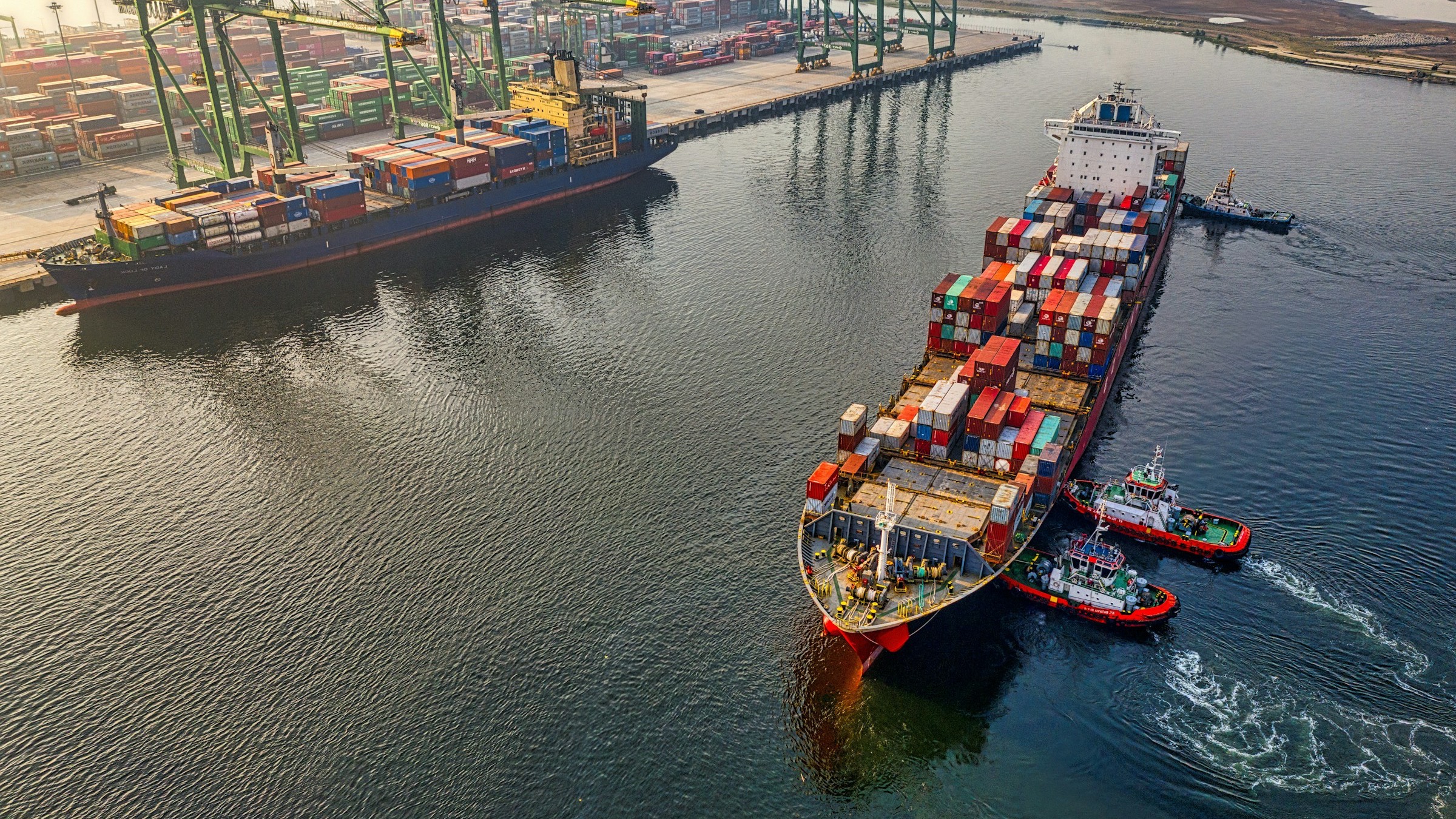
Congestion at Chinese ports: ten-day waits before Golden Week

WTO barometer: world trade is growing, but containers fall below trend
Fashion imports from China down 8.1%: what the figure says about suppliers
Hyper-amortisation and foreign machinery: the Made in EU rule is dropped

Chinese exports to Europe: just +6.6% while the rest of the world races ahead

Ten-T corridor delays Italy: Confetra's warning on Brenner and Terzo Valico

Panama Canal draft restrictions: Neopanamax cut postponed

Shanghai-Genoa container rates down 10%: what changes for those importing from China

Demurrage and detention charges disputed: Samsung seeks $186 million from CMA CGM at the FMC

Back to Suez: transits up 36% in August, but the route is only halfway there
Steel imports: "melt and pour" traceability starts on 1 October
China-Europe air cargo: the decline stops, what changes for importers
Goodbye to the €150 exemption: the EU parcel duty rewrites the rules of e-commerce imports
Beyond the electric car: China's new export wave of robots, AI and medicines

Steel: EU 50% tariff and new origin rules — what changes for importers
Air freight: when cargo takes flight, every detail counts
Customs checks on electronics imports: how to avoid penalties and optimise compliance

The Bialetti Moka changes hands: one of Italy's most iconic objects becomes Chinese

MSC is about to buy up ports around the world for 23 billion dollars

Import-export of jewellery and precious metals: what Italian law really says

How much does China really export? Figures and opportunities of the trade giant
OEM vs ODM: two key acronyms for creating a product under your own brand

The 5 questions we always ask our suppliers