New Maersk container ships: 26 units delivering from 2029
MONDAY, 21 SEPTEMBER 2026
Some 483,600 TEU of slot capacity, 10.5% of what the carrier operates today. But the 2024 plan is about replacement: the fleet stays around 4.3 million TEU.
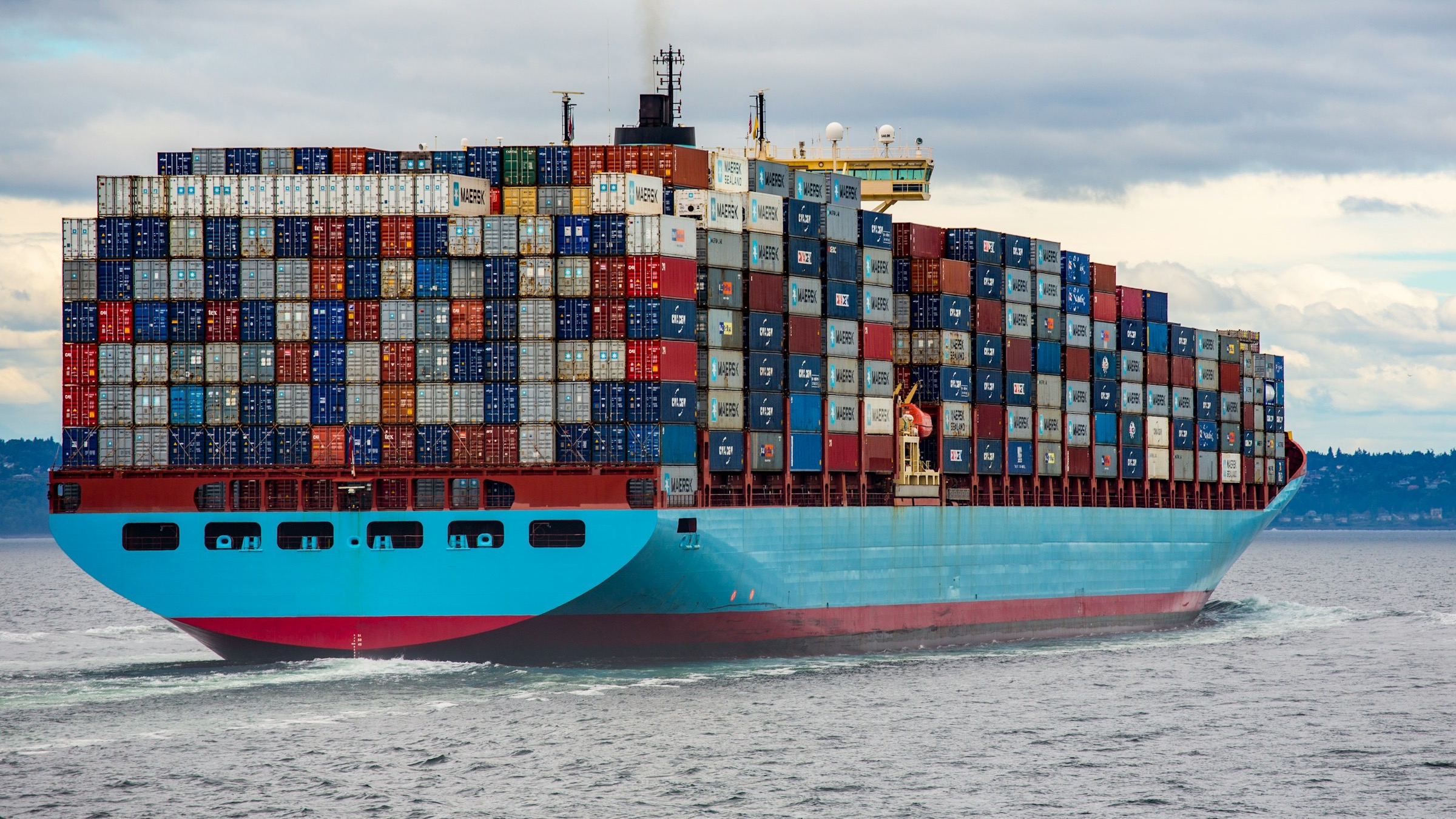
New Maersk container ships: the Danish carrier has confirmed an order for 26 units of 18,600 TEU each, with LNG dual-fuel engines and deliveries scheduled between 2029 and 2030. It is the largest single block of the fleet renewal plan announced in 2024, and it is worth reading for what it is: replacement tonnage, not capacity added to what already exists.
What the carrier confirmed, and what it did not
Maersk confirmed the number, the size and the propulsion of the vessels. It did not disclose the shipyards or the value of the contracts. Trade press attributes most of the work to China's Hengli Heavy Industries and recalls that eight ships of the same size were ordered at New Times in February, for the same delivery window: these are market accounts, not statements by the owner, and they should be kept separate from the confirmed figures.
- 26 ships of 18,600 TEU: roughly 483,600 TEU of combined slot capacity, equal to 10.5% of the capacity Maersk operates today.
- Deliveries between 2029 and 2030: none of these ships touches freight rates over the next three years.
- Operated capacity in September 2026 according to Alphaliner: MSC 7.136 million TEU, Maersk 4.612 million, CMA CGM 4.140 million.
- Target stated by Maersk in August 2024: keep the fleet at around 4.3 million TEU, at a renewal pace of some 160,000 TEU a year.
- Overall plan in that same announcement: 50-60 ships for 800,000 TEU, of which 300,000 owned and 500,000 on long-term charter.
The new Maersk container ships replace, they do not add
The distinction is not a nuance, and it was the owner itself that put it in writing in August 2024: the orders will not add overall capacity, and each incoming vessel will over time replace one scrapped at the end of its life. An order of 483,600 TEU read without that premise looks like expansion; read with it, it is the turnover of an ageing fleet, spread across two years of deliveries at that.
It is also worth not putting on the same line two numbers that measure different things. The 4.3 million TEU is the fleet size target stated by the company; the 4.612 million is operated capacity as recorded by Alphaliner, which includes chartered tonnage. The second figure being higher than the first does not prove the plan has been abandoned: the two rest on different bases.
Why LNG, and what the European allowance system has to do with it
Since 1 January 2026 the European emissions trading system covers 100% of verified shipping emissions, after 40% in 2024 and 70% in 2025; allowances are surrendered in the year following the one they refer to. From 2026 methane and nitrous oxide enter the scope as well, no longer carbon dioxide alone. The geographic criterion is unchanged: 100% of emissions between two Union ports and at berth, 50% on voyages starting or ending outside the Union, for ships of 5,000 gross tonnage and above.
Here the step from facts to reading has to be declared. A dual-fuel ship burns less carbon than marine gas oil, but unburnt methane is now itself inside the scope, and what pays off by 2030 depends on the price of allowances and fuels, which nobody knows today. What can be said without stretching is that the carrier is buying ships it can feed two ways, at a point when the cost of environmental compliance stops being partial.
What it means for importers
In the short term, little, and that is the useful part of the news. 2029 is three annual contracts away: in the meantime rates are moved by the Red Sea routing, by demand and by the capacity actually deployed on services, not by ships under construction. Anyone renegotiating a rate right now does not hold a new argument.
Three concrete things remain to be done with this news. Do not use it to postpone a commercial decision, because the ships do not arrive before 2029. Ask your freight forwarder how much of the rate is currently attributed to the European allowance system, given that coverage of 2026 emissions is full rather than 70%. And check that this line, in the contract, is a verifiable formula with an index and a date, not a fixed amount that renews itself.
Two numbers that do not add up
An order is not capacity until it sails, and 483,600 TEU ordered should be neither added to nor subtracted from the 4.612 million operated: the first is a building commitment spread over two years, the second a snapshot of today. For scale: in early January 2026 the world fleet counted 7,498 container ships for 33.69 million TEU, so the 26 vessels are worth about 1.4% of the world total at that date, and the plan containing them foresees scrapping on the other side. The figure to watch in the coming years is not the number of ships ordered, but the ratio between deliveries and demolitions.
With La Merce a cost forecast for 2027 is built on what is already in the water and on the lines written into the transport contract, the environmental charge and the fuel clause, not on twenty-six ships arriving in 2029.
Sources
Independent checks on the figures cited, verified in-house.
Read related articles
Diesel price at 2026 highs: what reaches your deliveries
Suez transits: the return is mostly on voyages back to Asia
Four Gemini services return to the Suez Canal: what changes for Ligurian ports
Congestion at Chinese ports: ten-day waits before Golden Week

Ten-T corridor delays Italy: Confetra's warning on Brenner and Terzo Valico
Panama Canal draft restrictions: Neopanamax cut postponed
Shanghai-Genoa container rates down 10%: what changes for those importing from China

Demurrage and detention charges disputed: Samsung seeks $186 million from CMA CGM at the FMC

Back to Suez: transits up 36% in August, but the route is only halfway there
China-Europe air cargo: the decline stops, what changes for importers
Goodbye to the €150 exemption: the EU parcel duty rewrites the rules of e-commerce imports
Air freight: when cargo takes flight, every detail counts
MSC is about to buy up ports around the world for 23 billion dollars

Incoterms: the basics of international trade
EU customs reform: what changes now and what in 2028
Costume jewellery imported from China: 49,512 items stopped in Genoa
Italian stone exports: value up, volumes down
European steel protection and the bill for those who transform it
The Italian small parcels tax is postponed to 30 November
China's electronics five-year plan: 30 trillion yuan by 2030
German import VAT reform: less cash tied up at the port
Italian exports in the second quarter of 2026: what the +7.9% really says
Container inspections: deficiencies in more than one unit in ten
Digital customs in Norway: with Digitoll, who reports what changes
Italian hyper-depreciation: confirmation due 60 days after approval
China producer prices are rising: what changes for buyers
European preference in public procurement: bids below 50% can be rejected

Lithium batteries in containers: thousands travel undeclared

WTO barometer: world trade is growing, but containers fall below trend
Fashion imports from China down 8.1%: what the figure says about suppliers

SVHC substances and importer obligations: the list rises to 253 entries
Hyper-amortisation and foreign machinery: the Made in EU rule is dropped

Chinese exports to Europe: just +6.6% while the rest of the world races ahead
Steel imports: "melt and pour" traceability starts on 1 October
Beyond the electric car: China's new export wave of robots, AI and medicines
Steel: EU 50% tariff and new origin rules — what changes for importers
Customs checks on electronics imports: how to avoid penalties and optimise compliance
The Bialetti Moka changes hands: one of Italy's most iconic objects becomes Chinese

Import-export of jewellery and precious metals: what Italian law really says
How much does China really export? Figures and opportunities of the trade giant
OEM vs ODM: two key acronyms for creating a product under your own brand

The 5 questions we always ask our suppliers