European steel protection and the bill for those who transform it
THURSDAY, 17 SEPTEMBER 2026
Il coil è passato da 630-640 a 750 euro a tonnellata in otto mesi. E fra Germania e Italia ci sono 15 euro a megawattora di differenza sull’energia.
European steel protection has been in force since July, and it shows in prices. The equivalent measure on imported finished goods, by contrast, is only a proposal and would apply from 2028. Between those two dates sit the firms that buy steel in order to transform it.
European steel protection: what is already in force
Since 1 July 2026 the European steel regime has replaced the old safeguard with tighter quotas and a far higher out-of-quota duty.
- Annual quotas importable duty-free: around 18.3 million tonnes, roughly 47% less than under the previous regime
- Duty applied above quota: 50%
- European HRC steel price in September 2026: around 750 euro per tonne
- The same product in January 2026: around 630-640 euro per tonne
- Extension of CBAM to downstream products: proposed with effect from 1 January 2028, around 180 categories
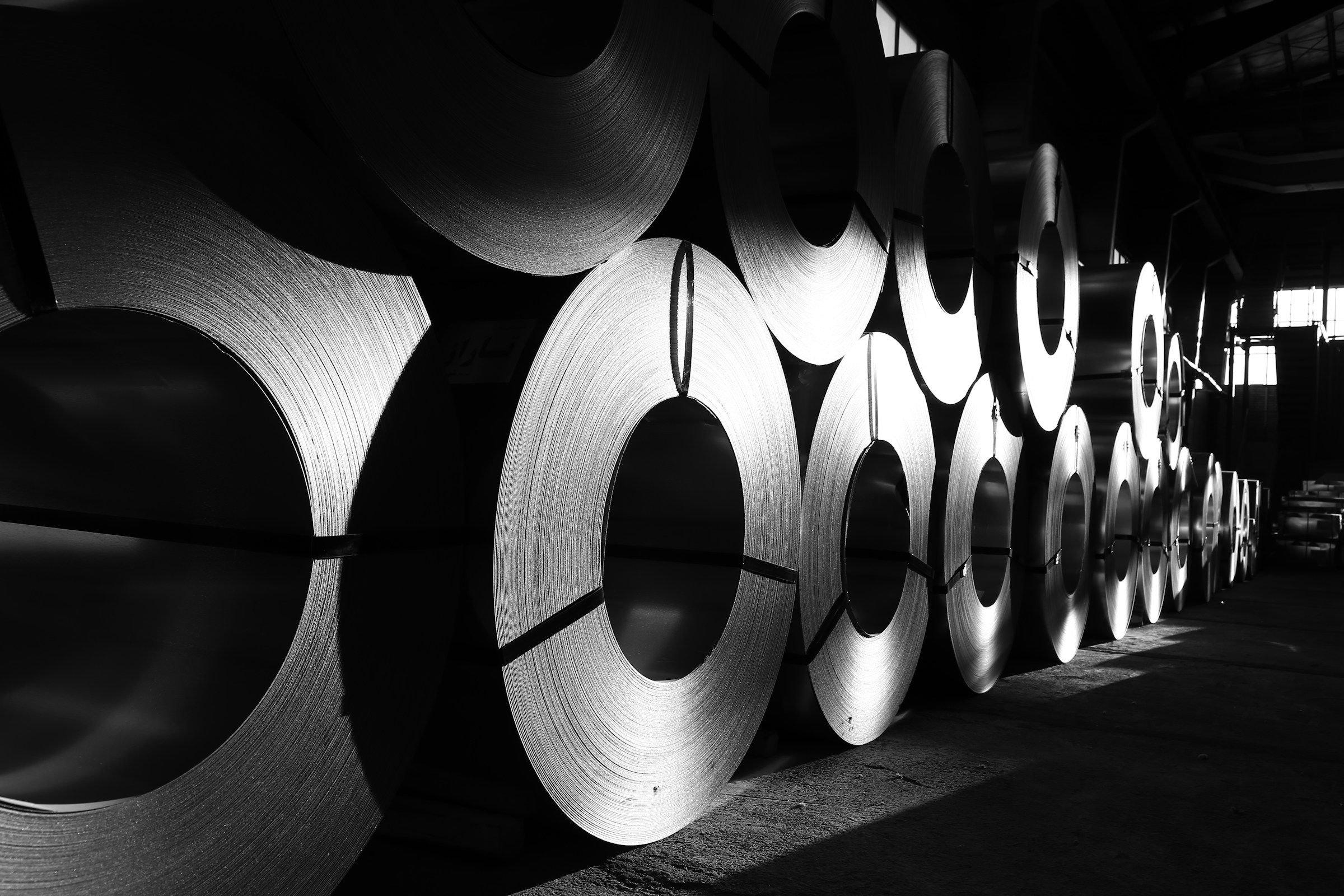
To this is added the obligation, operational from 1 October, to document the country of melt and pour of imported steel.
Prices, which rarely feature in the debate
Between January and September, hot-rolled coil in Europe went from around 630-640 to around 750 euro per tonne: some 18% more in eight months.
It should be stated precisely what this figure demonstrates and what it does not. It demonstrates that the internal price rose markedly in the period when the new regime came into force. It does not isolate how much of that rise depends on the trade measure and how much on other factors acting at the same time, starting with producers' energy costs. Attributing the whole increase to protection would be a shortcut; denying that it played a part would be one too.
The asymmetry, and the date meant to close it
The point raised by firms that transform steel is about sequence, not principle. Those buying steel in Europe already pay the differential created by protection, and then sell a finished product competing with imported goods on which an equivalent measure does not yet exist.
That measure, however, exists as a proposal and is fairly precise: the Commission has proposed extending the carbon border adjustment mechanism to around 180 categories of downstream products with a high steel and aluminium content, with effect from 1 January 2028. It covers fabricated metals, machinery, vehicle components, domestic appliances. The European Parliament has backed it and asked to widen the scope further.
Two details change the reach of that proposal, and it is worth holding them in mind. First: it still has to go through the ordinary legislative procedure, so it is not a certain deadline. Second: for downstream goods the mechanism would attribute emissions only to the precursor material, not to fabrication or assembly. It is therefore not a duty on the finished product, but a realignment on the steel content.
The gap exists and is measurable in years: protection on the input is in force, protection on the output is proposed for 2028. Whether this will shift production outside Europe is another question, on which there are currently arguments rather than measurements.
Energy: a single market with two prices
There is a second asymmetry, internal to the Union. Germany has approved a capped electricity price for energy-intensive firms of 5 cents per kilowatt hour, that is 50 euro per megawatt hour, for the three years starting in 2026, subject to Commission approval. Italy's Energy Release works on a reference of 65 euro per megawatt hour, and its entry into force has been put back by a year.
Fifteen euro per megawatt hour of difference, between two countries in the same market, on an item that is not marginal for a steel transformer. It is a figure, not a judgement: how much it weighs depends on the energy intensity of the particular process.
What steel buyers can do now
The first thing is to separate the items. When an increase arrives, ask which part comes from the raw material price, which from energy and which from the duty: these are three dynamics with different timings and prospects, and treating them as a single block removes any negotiating room.
The second concerns origin. With the obligation to document melt and pour, the provenance of the steel embedded in your purchases has become contractual information: it is worth asking the supplier systematically, even when you buy a semi-finished product rather than coil.
The third looks to 2028. If you buy products that would fall into the categories proposed for the carbon border extension, it is worth knowing now how much steel they contain and where it comes from: when the rule arrives, the information will be needed anyway.
With La Merce, reading European steel protection means separating the raw material price from the cost of energy and from the duty when negotiating an increase, and asking for the origin of embedded steel before it becomes a documentary obligation for finished products too.
Sources
Independent checks on the figures cited, verified in-house.
- EUROMETAL — European local HRC prices rise on tighter availability, higher energy costs
- SteelOrbis — European Parliament backs CBAM extension to cover downstream steel products
- PwC — EC proposes CBAM expansion to 180 downstream products
- Mayer Brown — European Commission issues CBAM operational rules and proposes downstream extension of the CBAM scope
- Clean Energy Wire — Germany set to introduce industrial electricity price by beginning of 2026
- Crowell & Moring — EU Steel Overcapacity Regulation 2026/1384: 50% out-of-quota duty, melt and pour rules
Read related articles
China's electronics five-year plan: 30 trillion yuan by 2030
Italian hyper-depreciation: confirmation due 60 days after approval
Hyper-amortisation and foreign machinery: the Made in EU rule is dropped

The Bialetti Moka changes hands: one of Italy's most iconic objects becomes Chinese
OEM vs ODM: two key acronyms for creating a product under your own brand
Italian stone exports: value up, volumes down
Diesel price at 2026 highs: what reaches your deliveries
Suez transits: the return is mostly on voyages back to Asia
The Italian small parcels tax is postponed to 30 November
German import VAT reform: less cash tied up at the port
Four Gemini services return to the Suez Canal: what changes for Ligurian ports
Italian exports in the second quarter of 2026: what the +7.9% really says
Container inspections: deficiencies in more than one unit in ten
Digital customs in Norway: with Digitoll, who reports what changes
China producer prices are rising: what changes for buyers

European preference in public procurement: bids below 50% can be rejected

Lithium batteries in containers: thousands travel undeclared
Congestion at Chinese ports: ten-day waits before Golden Week
WTO barometer: world trade is growing, but containers fall below trend
Fashion imports from China down 8.1%: what the figure says about suppliers

SVHC substances and importer obligations: the list rises to 253 entries

Chinese exports to Europe: just +6.6% while the rest of the world races ahead

Ten-T corridor delays Italy: Confetra's warning on Brenner and Terzo Valico

Panama Canal draft restrictions: Neopanamax cut postponed

Shanghai-Genoa container rates down 10%: what changes for those importing from China

Demurrage and detention charges disputed: Samsung seeks $186 million from CMA CGM at the FMC

Back to Suez: transits up 36% in August, but the route is only halfway there
Steel imports: "melt and pour" traceability starts on 1 October

China-Europe air cargo: the decline stops, what changes for importers
Goodbye to the €150 exemption: the EU parcel duty rewrites the rules of e-commerce imports
Beyond the electric car: China's new export wave of robots, AI and medicines
Steel: EU 50% tariff and new origin rules — what changes for importers
Air freight: when cargo takes flight, every detail counts

Customs checks on electronics imports: how to avoid penalties and optimise compliance

MSC is about to buy up ports around the world for 23 billion dollars

Import-export of jewellery and precious metals: what Italian law really says

How much does China really export? Figures and opportunities of the trade giant
The 5 questions we always ask our suppliers

Incoterms: the basics of international trade