Port of Rotterdam container throughput: full imports up 8.9%, transhipment down 20%
SUNDAY, 18 OCTOBER 2026
In the first nine months of 2026 the Dutch port stood still in TEU, but cargo bound for the European hinterland rose 7.2% and transhipment slumped because terminals are short of space.
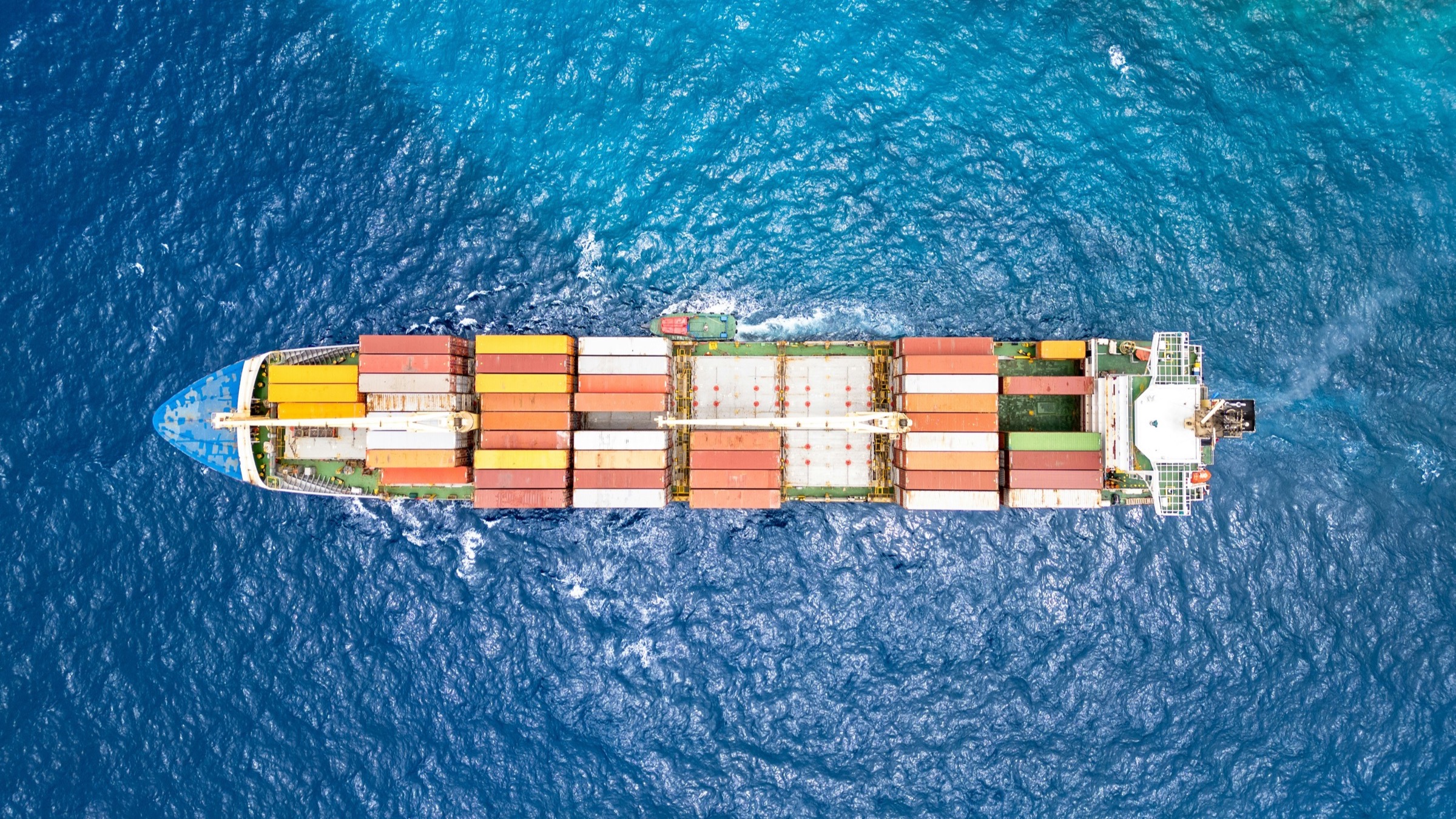
Port of Rotterdam container throughput shows full containers arriving up 8.9% in the first nine months of 2026, while full containers leaving rose by only 1%. That is the picture in the figures published on 16 October by the port authority: container volumes in TEU stood still, but cargo bound for the European hinterland increased and transhipment to other ports fell sharply.
Port of Rotterdam container throughput in nine months
Overall, the Dutch port handled 323.2 million tonnes of cargo between January and September, 0.9% more than in the same period of 2025, when it reached 320.2 million. The growth, however, comes from bulk cargo, led by coal and oil. Containers, measured in tonnes, are down, and the aggregate figure hides two opposite movements: more cargo entering Europe through Rotterdam, and less cargo passing through only to be reloaded onto another ship.
- Total throughput: 323.2 million tonnes in the first nine months of 2026, +0.9% on the same period of 2025.
- Containers in TEU: +0.1% over nine months; in tonnes: -2.2%.
- Container volumes bound for the hinterland: +7.2% over nine months.
- Full containers imported: +8.9%; full containers exported: +1%.
- Transhipment (containers reloaded onto other ships): -20% over nine months.
More imports than exports: empty container traffic grows
The port authority explains that the growth in hinterland volumes is mainly due to the rise in full containers arriving. Exports of full containers grew again, by 1%, after a period of contraction, but far less than imports. The result is an imbalance: since more full containers come in than go out, the number of empty containers to be repositioned grows, which the port reports as continuing to rise.
The 2.2% fall in tonnes against stable TEU fits this picture: an empty container counts as one TEU but weighs little. The release does not break the figure down by origin, so it does not say how much of the increase in imports comes from China or Asia.
Why transhipment fell by 20%
Transhipment is the part of the traffic that never touches the European market: containers unloaded from a mother vessel and reloaded onto smaller ships bound for other ports. In Rotterdam it fell by 20%. The port authority's explanation is capacity: the terminals for large deep-sea vessels have long had space constraints, so part of the cargo is handled by other ports, which frees up room for hinterland flows.
Two factors weigh on the rest of the traffic, and the authority names them explicitly. Non-containerised general cargo fell by 10.2% because of the prolonged stagnation of European manufacturing, especially machine building and automotive. And low water levels on European rivers disrupted supply chains, with higher transport costs for raw materials bound for steelworks. On the energy side, after the closure of the Strait of Hormuz European refineries imported more crude: crude oil +2.1%, oil products +11.1%.
What it means for importers
The figure concerns a Northern European port and does not measure Italian imports: companies buying in Asia for the Italian market mostly use Italian ports. It does, however, point to a few things that matter to anyone organising shipments.
The first concerns those who already land cargo in Rotterdam or other Northern European ports, to serve customers in Germany, the Benelux or Northern Italy by rail and truck. A terminal short of space that has given priority to hinterland flows suggests checking with the forwarder the actual dwell and pick-up times, and storage costs beyond the free time, before confirming the route.
The second concerns low water levels. Barge transport on the Rhine is one of the main routes from Rotterdam inland; when the water drops, barges sail with less cargo and carriers apply surcharges. For those receiving goods in Germany or Switzerland, it is worth asking whether the quote includes a low-water surcharge and at what river level it applies.
The third is the imbalance between full containers arriving and leaving. More empties to reposition is a cost for carriers, and over time it may show up in rates. It is neither an automatic nor an immediate effect, but it is worth bearing in mind when comparing quotes for the first quarter of 2027.
With La Merce, a shipment from China for customers in Northern Europe is assessed by comparing a landing in Rotterdam, where transhipment fell by 20% and full imports rose by 8.9%, with a landing in an Italian port, with the times and surcharges of both routes written into the quote.
Sources
Independent checks on the figures cited, verified in-house.
Read related articles

Ocean freight rates rebound: Shanghai-Genoa up 7% after 13 weeks of decline

EU ETS shipping: carriers buy almost 20% of EU allowances

Container ship delays: only 4% on time from Asia to Europe in September
Container cost from China to Europe: every cost item and a worked example

Truck stoppage in Calabria and Sicily: deliveries at risk from 9 to 20 October
Air cargo in September: demand +6% and ever shorter contracts
Asia-Europe container rates: twelve weeks of decline, Shanghai-Genoa at 3,702 dollars

Container connectivity at Italian ports: Genoa, Gioia Tauro and La Spezia decline
Sicily truck stoppage from 16 to 20 October: how to protect deliveries
Pinglu Canal: 560 kilometres less to reach the sea
New Maersk container ships: 26 units delivering from 2029
Diesel price at 2026 highs: what reaches your deliveries
Suez transits: the return is mostly on voyages back to Asia
Four Gemini services return to the Suez Canal: what changes for Ligurian ports
Congestion at Chinese ports: ten-day waits before Golden Week

Ten-T corridor delays Italy: Confetra's warning on Brenner and Terzo Valico
Panama Canal draft restrictions: Neopanamax cut postponed
Shanghai-Genoa container rates down 10%: what changes for those importing from China

Demurrage and detention charges disputed: Samsung seeks $186 million from CMA CGM at the FMC

Back to Suez: transits up 36% in August, but the route is only halfway there
China-Europe air cargo: the decline stops, what changes for importers
Goodbye to the €150 exemption: the EU parcel duty rewrites the rules of e-commerce imports
Air freight: when cargo takes flight, every detail counts
MSC is about to buy up ports around the world for 23 billion dollars

Incoterms: the basics of international trade

TARIC code lookup: the 10 digits, the EU database and Binding Tariff Information
EU safeguard measures: Chinese chemicals and machinery targeted after the summit
Customs clearance in Italy for goods from China: how it works, the documents and the customs entry
China export controls: 14 technologies to be banned in AI, biotech and solar

How to find reliable suppliers in China: five channels and how to spot a real factory

Canton Fair 2026 opens with 32,000 exhibitors, running until 4 November
China rare earth exports: 4,270 tonnes in September, faster EU licences
EORI number Italy: what it is, how to get one and how to check it before your first import

China trade surplus: exports up 36.3% in September, surplus with the EU at 34.8 billion
China producer prices up 5% in September, the fastest since 2022

Import duty from China to EU: how to calculate it, with a worked example
China export tax rebate: electric vehicles cut to 9% from 2027, e-cigarettes out
How to get CE marking: the steps and the importer's obligations
EU China trade deal: fewer hybrids and lower tariffs on €4 billion
Critical raw materials strategic projects: the EU picks 46, five in Italy

Trademark registration grant: Italy's Marchi+ 2026 refunds up to 9,000 euros per trademark abroad
World trade forecast: WTO raises 2026 goods growth to 3.9%

How to import from China to Europe: a step-by-step guide for businesses
After Golden Week: what to expect from Chinese factories and shipping
China's battery plan: parts-per-billion defects by 2030

Sourcing by Italian SMEs: 86% domestic, but non-EU rises to 22%
Hyper-depreciation or tax credits: what the UPB says about machinery incentives
China's manufacturing PMI at 50.1: factory costs and prices rise

European 301 tool against China: what we know and what we don't
Digital DeCA in Spain from 5 October: what changes for road freight
Industrial profits in China: +15.7%, but clothing and furniture fall
Extra-EU imports in August: +17.2%, from China +16%

US-China tariffs cut on 30 billion: what changes for buyers in China
Transport packaging rules and the PPWR: 40% reusable by 2030
Industrial robots in China: 354,000 installed in 2025, 59% of the world
Leather excluded from the EUDR: what changes for importers from 7 October
Chinese trucks assembled in Europe: the Steyr plant in Austria

Supply chain risk monitoring: only 20% do it continuously
EU customs reform: what changes now and what in 2028
Costume jewellery imported from China: 49,512 items stopped in Genoa
Italian stone exports: value up, volumes down
European steel protection and the bill for those who transform it
The Italian small parcels tax is postponed to 30 November
China's electronics five-year plan: 30 trillion yuan by 2030
German import VAT reform: less cash tied up at the port
Italian exports in the second quarter of 2026: what the +7.9% really says
Container inspections: deficiencies in more than one unit in ten
Digital customs in Norway: with Digitoll, who reports what changes
Italian hyper-depreciation: confirmation due 60 days after approval
China producer prices are rising: what changes for buyers

European preference in public procurement: bids below 50% can be rejected

Lithium batteries in containers: thousands travel undeclared
WTO barometer: world trade is growing, but containers fall below trend
Fashion imports from China down 8.1%: what the figure says about suppliers

SVHC substances and importer obligations: the list rises to 253 entries
Hyper-amortisation and foreign machinery: the Made in EU rule is dropped
Chinese exports to Europe: just +6.6% while the rest of the world races ahead
Steel imports: "melt and pour" traceability starts on 1 October
Beyond the electric car: China's new export wave of robots, AI and medicines
Steel: EU 50% tariff and new origin rules — what changes for importers
Customs checks on electronics imports: how to avoid penalties and optimise compliance

The Bialetti Moka changes hands: one of Italy's most iconic objects becomes Chinese

Import-export of jewellery and precious metals: what Italian law really says
How much does China really export? Figures and opportunities of the trade giant
OEM vs ODM: two key acronyms for creating a product under your own brand

The 5 questions we always ask our suppliers