Costume jewellery imported from China: 49,512 items stopped in Genoa
MONDAY, 21 SEPTEMBER 2026
Cadmium up to 49.1% by weight and lead up to 4.95%, against European limits of 0.01% and 0.05%. In the same container, 720 pairs of sunglasses with no CE mark.
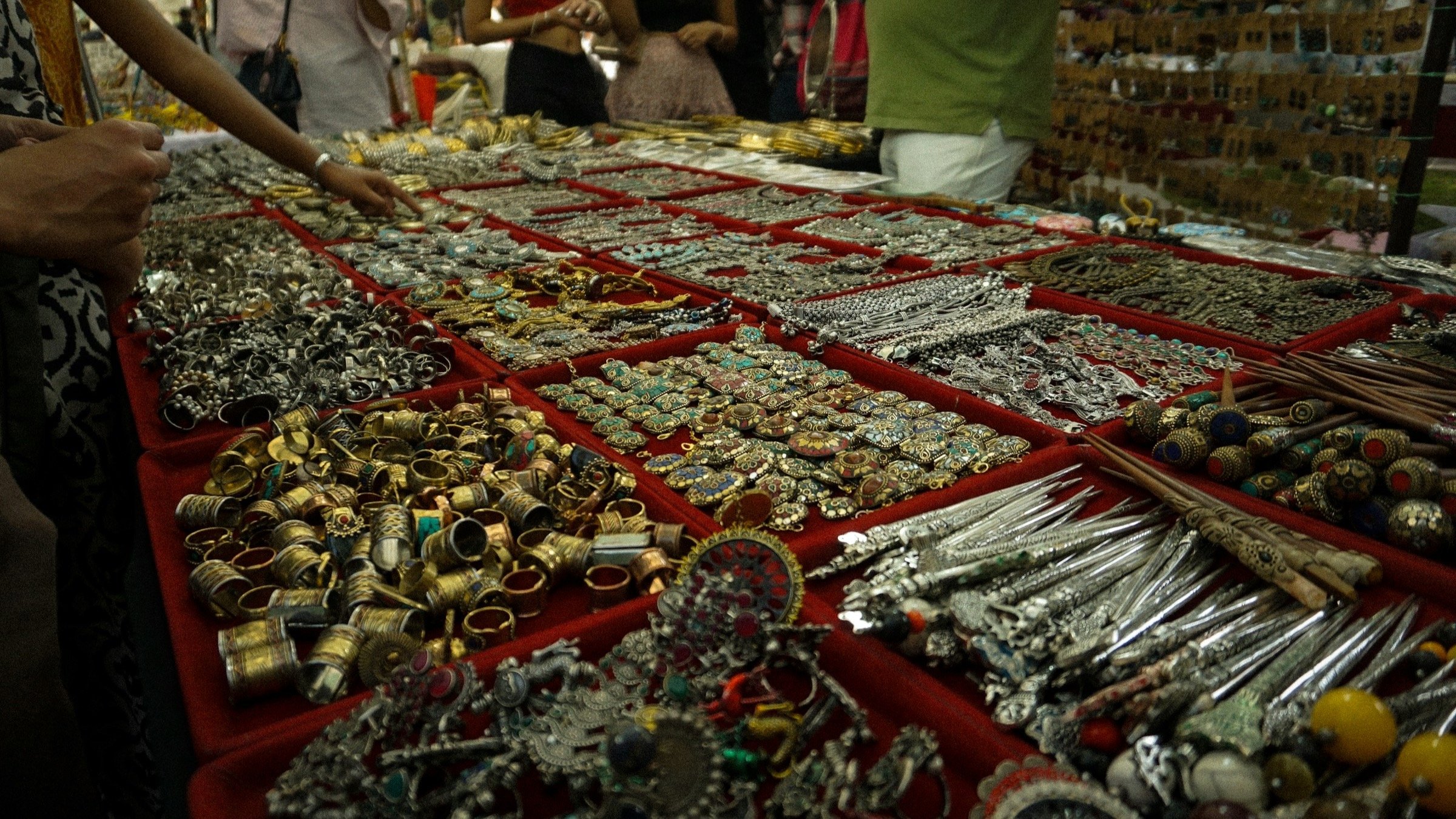
Costume jewellery imported from China was at the centre of a customs check that ended badly: on 21 September the Italian Customs and Monopolies Agency and the II Group of the Genoa Financial Police seized 49,512 items — necklaces, bracelets, rings, earrings and pendants — that had arrived in a container at the Genoa Pra' port basin, consigned to an Italian importing company. The seizure was not triggered by a missing document, but by laboratory analysis.
What was found in the container
The Agency's chemical laboratories looked for three metals: cadmium, lead and nickel. They found all three in concentrations above the thresholds set by European health protection rules. Sunglasses were travelling in the same load, were checked separately and failed too; for the pairs carrying a CE mark but no documentation, attempted commercial fraud has been alleged.
- Cadmium: up to 49.1% by weight in the samples analysed, against a European limit of 0.01%.
- Lead: up to 4.95% by weight, against a limit of 0.05%.
- Nickel: detected above the permitted release thresholds, with no measured value made public.
- 49,512 items of costume jewellery seized, all in a single container shipped from China.
- Non-compliant sunglasses: 720 pairs with no CE mark and no mandatory information, another 579 carrying the mark but with no technical file and no EU declaration of conformity.
The European limits for costume jewellery imported from China
The thresholds sit in Annex XVII to the REACH regulation, Regulation (EC) 1907/2006. Entry 23 bans cadmium at or above 0.01% by weight in the metal parts of jewellery and costume jewellery: the limit is calculated on each metal part, surface coatings included, not on the weight of the whole object. Entry 63 sets lead at 0.05% by weight in the same articles. Entry 27 does not look at content but at release through the skin: 0.2 micrograms per square centimetre per week for items inserted into pierced parts of the body, 0.5 for those in direct and prolonged contact.
Set against the Genoa measurements, those thresholds show the size of the gap: the cadmium found stands to its own limit as 4,910 to 1, the lead as 99 to 1. These are ratios between two numbers, not an estimate of the risk to someone wearing a bracelet, which also depends on how much is released and for how long there is contact. They do make clear, though, that this is not a marginal overshoot.
Sunglasses are protective equipment
Under European law a pair of sunglasses is not a fashion accessory: it is category I personal protective equipment under Regulation (EU) 2016/425, because it protects the eyes from sunlight. Category I requires no involvement by a notified body, so for these products no certificate issued by a third party exists at all: it is the manufacturer who affixes the CE mark, draws up the EU declaration of conformity and keeps the technical file.
That is precisely why the documentation has to be requested. Conformity with the harmonised standard EN ISO 12312-1 creates a presumption that the health and safety requirements in Annex II to the regulation are met, but the presumption holds only if the evidence exists and somebody is holding it. Without a declaration, the CE mark printed on the temple is just lettering: the 579 pairs stopped in Genoa had the mark and nothing else.
What it means for importers
Whoever places a product on the European market answers for its conformity even when all they did was buy it: the seizure hits the Italian importer, not the Chinese supplier. And the bill is not only the value of the goods. It is that value plus the freight already paid, plus storage and destruction costs, plus the time needed to reorder, plus the attention that the same operator's next shipments will receive at customs.
The useful checkpoint comes earlier, and it turns into three concrete requests to the supplier. A test report on each metal part — not on the finished object, not sampled on the best-selling colour alone — covering cadmium, lead and nickel release. For eyewear and any other protective equipment, the EU declaration of conformity quoting the harmonised standard applied. And a written commitment to repeat the tests whenever the electroplated coating changes, given that the cadmium limit is calculated on surface layers too.
What a seizure does, and does not, tell you
One container stopped measures one container. It does not say how much non-compliant costume jewellery enters Europe, because customs checks are targeted rather than random, and it says nothing about the average quality of Chinese suppliers: it says that this lot, from this supplier, for this importer, was over the limits. The signal worth picking up concerns selection criteria instead, because the analyses covered metals the Union has restricted for years, in a product category customs laboratories have always watched. This was not an unforeseeable risk.
With La Merce a costume jewellery order in China starts with the test report on cadmium, lead and nickel release requested from the supplier before production, not once the container is already moored in Genoa.
Sources
Independent checks on the figures cited, verified in-house.
- ANSA — Gdf-Adm sequestrano in porto a Genova Pra' oltre 49 mila pezzi di bigiotteria
- GenovaToday — Porto Pra', sequestrati 49mila gioielli tossici: cadmio e piombo nei prodotti dalla Cina
- Helpdesk nazionale REACH — MIMIT — Restrizioni (allegato XVII del regolamento REACH)
- Commissione europea — Personal protective equipment — Regulation (EU) 2016/425
Read related articles
Container inspections: deficiencies in more than one unit in ten
Lithium batteries in containers: thousands travel undeclared

SVHC substances and importer obligations: the list rises to 253 entries
Supplier assessment: only those meeting the highest standards of quality, safety and sustainability
New Maersk container ships: 26 units delivering from 2029
Italian stone exports: value up, volumes down
Diesel price at 2026 highs: what reaches your deliveries
Suez transits: the return is mostly on voyages back to Asia
European steel protection and the bill for those who transform it
The Italian small parcels tax is postponed to 30 November

China's electronics five-year plan: 30 trillion yuan by 2030
German import VAT reform: less cash tied up at the port
Four Gemini services return to the Suez Canal: what changes for Ligurian ports
Italian exports in the second quarter of 2026: what the +7.9% really says

Digital customs in Norway: with Digitoll, who reports what changes
Italian hyper-depreciation: confirmation due 60 days after approval
China producer prices are rising: what changes for buyers
European preference in public procurement: bids below 50% can be rejected
Congestion at Chinese ports: ten-day waits before Golden Week
WTO barometer: world trade is growing, but containers fall below trend
Fashion imports from China down 8.1%: what the figure says about suppliers
Hyper-amortisation and foreign machinery: the Made in EU rule is dropped
Chinese exports to Europe: just +6.6% while the rest of the world races ahead

Ten-T corridor delays Italy: Confetra's warning on Brenner and Terzo Valico

Panama Canal draft restrictions: Neopanamax cut postponed

Shanghai-Genoa container rates down 10%: what changes for those importing from China

Demurrage and detention charges disputed: Samsung seeks $186 million from CMA CGM at the FMC

Back to Suez: transits up 36% in August, but the route is only halfway there
Steel imports: "melt and pour" traceability starts on 1 October

China-Europe air cargo: the decline stops, what changes for importers

Goodbye to the €150 exemption: the EU parcel duty rewrites the rules of e-commerce imports
Beyond the electric car: China's new export wave of robots, AI and medicines
Steel: EU 50% tariff and new origin rules — what changes for importers

Air freight: when cargo takes flight, every detail counts
Customs checks on electronics imports: how to avoid penalties and optimise compliance
The Bialetti Moka changes hands: one of Italy's most iconic objects becomes Chinese

MSC is about to buy up ports around the world for 23 billion dollars
Import-export of jewellery and precious metals: what Italian law really says

How much does China really export? Figures and opportunities of the trade giant
OEM vs ODM: two key acronyms for creating a product under your own brand

The 5 questions we always ask our suppliers