Congestion at Chinese ports: ten-day waits before Golden Week
SUNDAY, 13 SEPTEMBER 2026
Capacity waiting to berth passes the 2022 record, but weighs on a much larger fleet. With 55 idle ships out of 5,400, delays do not clear on their own.
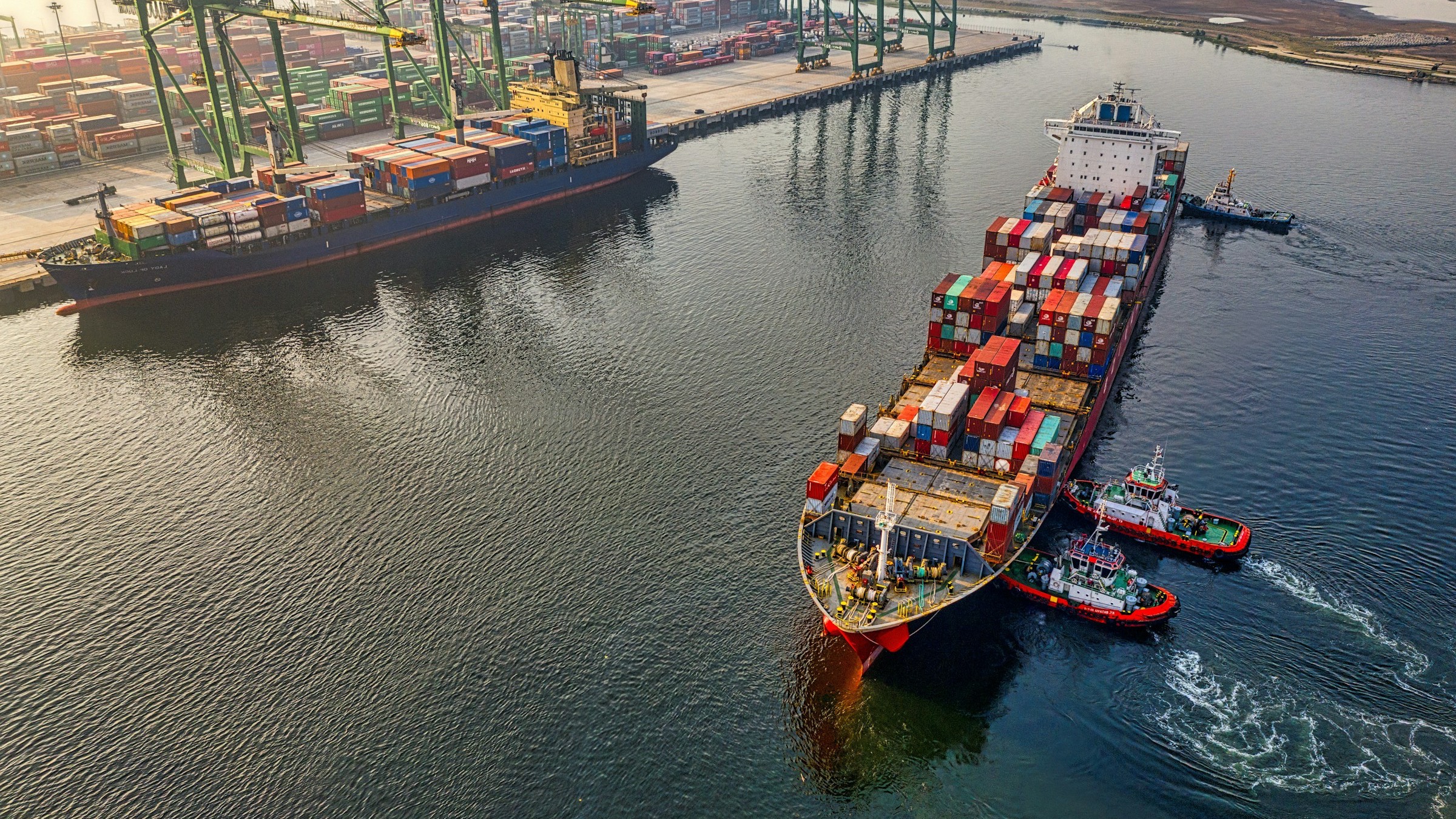
Congestion at Chinese ports has pushed capacity waiting to berth to 4.31 million TEU, above the 2022 peak. At Shanghai and Ningbo-Zhoushan waits run to ten days, and in three weeks the factories close for Golden Week.
Chinese port congestion: the figures behind it
Data gathered by the sector's analysis firms captures a situation not seen since the pandemic.
- Capacity waiting to berth worldwide: 4.31 million TEU, above the previous high of 4 million recorded in 2022
- Share of the world fleet immobilised: 12.6%, against 15.7% in 2022
- North Asia: 54% of global congestion, around 2.5 million TEU waiting
- Waiting time to berth at Shanghai and Ningbo-Zhoushan: up to ten days
- Idle vessels available to return to service: 55 out of more than 5,400 active, amounting to 164,000 TEU
The most recent trigger is typhoon Saudel, which on 26 August halted terminal operations at Ningbo-Zhoushan and also hit Shanghai. It is not an isolated episode, though: the backlog has been building for two months, after a sequence of typhoons that struck Chinese ports repeatedly.
An absolute record that weighs less than it appears
It is worth reading the first and second figures together, because they say different things. In absolute terms the blocked capacity is the highest ever measured. As a percentage of the fleet it is lower than in 2022: 12.6% against 15.7%.
The difference lies in the denominator. The world container fleet has grown considerably in four years, so the same number of ships queuing weighs on a larger pool. A headline that stops at the "historic record" describes the first number correctly and leaves out the second.
This does not make the congestion harmless: ten days waiting to berth are ten days, regardless of how large the world fleet is. But it suggests treating the comparison with 2022 as a partial analogy, not as a return to that situation.
Why the delays do not clear on their own
The most telling figure in the list is probably the last one, and it is the one that goes most unnoticed. When a rotation is missed, the traditional buffer is to bring an idle ship back into service. Today idle ships number 55 out of more than 5,400 active: half a percentage point of the fleet, 164,000 TEU in total.
With a reserve that thin, a delay does not stay where it started. It generates omitted calls, cargo reprotected onto later departures and berthing windows lost across the whole rotation, including at ports that had no problem at all. That is why the effects of a late-August stoppage are still visible in mid-September, and plausibly beyond.
On the main east-west trades, between week 37 and week 41 — from 7 September to 11 October — 47 cancelled sailings have already been announced out of 729 scheduled, around 6%.
What to check before 1 October
From 1 to 7 October Chinese factories close for the national holiday. Shippers are therefore concentrating deliveries to the terminals in the second half of September, that is onto a port system that has not yet cleared its backlog.
The first point concerns the supplier's real closing date. The official week is one thing, the actual one is often longer: it is worth asking in writing for the day production resumes and the day of delivery to the terminal, not just the week.
The second concerns the difference between a booking and a loading. With 6% of departures cancelled over this window, a confirmed booking does not amount to a ship sailing on that date. Asking the carrier to confirm the service, and not only the forwarder's estimate, is a check that costs one email.
The third is the arrival date. If you are promising deliveries to your Italian customer on the basis of the departure, with ten days waiting to berth and knock-on cancellations the margin has to be calculated on the actual arrival, not on the ETD.
With La Merce, handling congestion at Chinese ports ahead of Golden Week means having two dates in writing from the supplier — production restart and delivery to the terminal — plus service confirmation from the carrier, because with 6% of departures cancelled between September and October the booking alone is not enough.
Sources
Independent checks on the figures cited, verified in-house.
- The Maritime Executive — Port Congestion Sets New Record at 4.3M TEU in Stranded Volume
- Port Technology International — Global port congestion hits record 4.3 million TEUs
- APL Logistics — Typhoon Saudel disrupting Ningbo port operations amid severe North Asia congestion
- Drewry — Cancelled Sailings Tracker
Read related articles

Ten-T corridor delays Italy: Confetra's warning on Brenner and Terzo Valico
Panama Canal draft restrictions: Neopanamax cut postponed

Shanghai-Genoa container rates down 10%: what changes for those importing from China

Demurrage and detention charges disputed: Samsung seeks $186 million from CMA CGM at the FMC

Back to Suez: transits up 36% in August, but the route is only halfway there
China-Europe air cargo: the decline stops, what changes for importers
Goodbye to the €150 exemption: the EU parcel duty rewrites the rules of e-commerce imports
Air freight: when cargo takes flight, every detail counts
MSC is about to buy up ports around the world for 23 billion dollars

Incoterms: the basics of international trade
Italian hyper-depreciation: confirmation due 60 days after approval

China producer prices are rising: what changes for buyers

European preference in public procurement: bids below 50% can be rejected

Lithium batteries in containers: thousands travel undeclared

WTO barometer: world trade is growing, but containers fall below trend
Fashion imports from China down 8.1%: what the figure says about suppliers

SVHC substances and importer obligations: the list rises to 253 entries
Hyper-amortisation and foreign machinery: the Made in EU rule is dropped

Chinese exports to Europe: just +6.6% while the rest of the world races ahead
Steel imports: "melt and pour" traceability starts on 1 October
Beyond the electric car: China's new export wave of robots, AI and medicines
Steel: EU 50% tariff and new origin rules — what changes for importers
Customs checks on electronics imports: how to avoid penalties and optimise compliance

The Bialetti Moka changes hands: one of Italy's most iconic objects becomes Chinese

Import-export of jewellery and precious metals: what Italian law really says
How much does China really export? Figures and opportunities of the trade giant

OEM vs ODM: two key acronyms for creating a product under your own brand

The 5 questions we always ask our suppliers