Four Gemini services return to the Suez Canal: what changes for Ligurian ports
TUESDAY, 15 SEPTEMBER 2026
Maersk and Hapag-Lloyd move AE5, AE11, AE12 and ME2 onto the shorter route while the Red Sea security picture hardens. Both things are true at once.
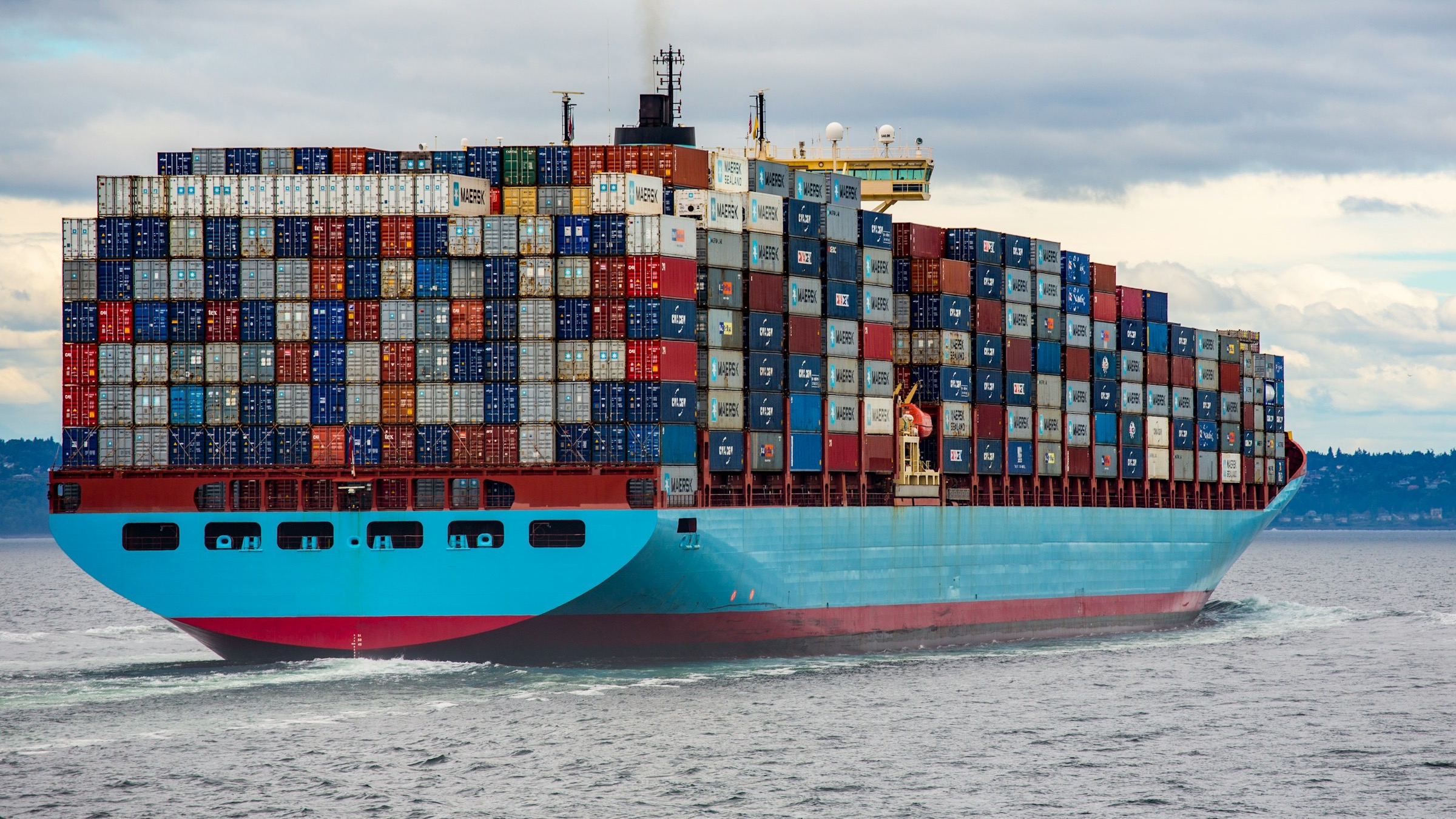
Four Gemini services are returning to the Suez Canal instead of routing around Africa, and one of them calls at La Spezia, Genoa and Vado Ligure. The decision comes as the situation in the Red Sea worsens: both are true at the same time, and it is worth holding them together.
The Gemini services returning to the Suez Canal
Maersk and Hapag-Lloyd, which operate together in the Gemini agreement, have announced the shift onto the Suez route of four Asia-Europe connections until now routed around the Cape of Good Hope.
- Services moving from the Cape of Good Hope to the Suez Canal: four, designated AE5, AE11, AE12 and ME2
- Gemini services on the Suez route in total after the shift: six, counting AE15 and AE19 already back
- First westbound sailing of AE11: 19 September from Tanjung Pelepas
- Italian ports called by AE11: La Spezia, Genoa and Vado Ligure
- Canal transits planned for each of the four services: two, outbound and return
AE11 links Asia and the Mediterranean with the rotation Shanghai, Yantian, Tanjung Pelepas, Suez Canal, Tanger Med, Valencia, Barcelona, La Spezia, Genoa, Vado Ligure, Suez Canal, Singapore. The opposite direction switches to the new route towards the end of September.
What it means for anyone importing from Asia
The Suez route is shorter than the one around Africa: at equal speed, transit time gets shorter. That is the fact.
From here on we are into interpretation, and it is worth saying so. A shorter transit does not automatically translate into a nearer delivery, for two reasons. The first is that during the switch from one route to the other, differently routed ships coexist for some weeks: two consecutive sailings of the same service can have very different timings. The second is that time gained at sea can be absorbed at the quay, and Ligurian ports are not immune to European congestion.
There is, though, a less visible effect worth knowing, because it concerns the market rather than the individual shipment. A longer route absorbs more ships to keep the same weekly frequency: stretching the loop means tying up capacity. Shortening it frees capacity. If the return to Suez holds, that capacity comes back to the market, and it is one of the factors weighing on freight rates.
There is then an explicit condition the carriers themselves have set: keeping the new routes depends on stability in the Red Sea area. It is not boilerplate. The same ships went back around the Cape of Good Hope once, and can do so again.
The context that should not be hidden
The shift comes at a time when Houthi militias have gained positions relevant to control of the Bab el-Mandeb strait, the compulsory passage towards the Red Sea.
Here we stop at the facts, because the rest is forecasting: two major carriers have decided operating conditions justify the return, and at the same time the security picture has hardened. Anyone reading only one of these two things forms a wrong idea. Anyone holding them together understands why the carriers accompanied the announcement with a caveat.
What to do now, concretely
The first step concerns shipments already booked. If you have cargo leaving Asia in the coming weeks, it is worth asking your forwarder which route that specific vessel is on, not the service in general: during the switch the difference lies in the individual sailing.
The second concerns the dates promised to the customer. Until the transition is complete, it is better to communicate windows rather than days, and to recalculate them when loading confirmation actually arrives.
The third concerns longer-term contracts. If you are negotiating rates for the coming months, the security caveat stated by the carriers is an element to put on the table: asking what happens to delivery times if the ships go back around Africa is a legitimate question, and the answer says a lot about the counterparty.
With La Merce, reading the return of the Gemini services to the Suez Canal means checking the routing of the individual vessel before promising a date, because among the sailings of these weeks the route changes from one to the next.
Sources
Independent checks on the figures cited, verified in-house.
- The Loadstar — Gemini steps up return to Suez with four more Asia-Europe services
- gCaptain — Maersk, Hapag-Lloyd accelerate return to Suez despite Red Sea risks
- Global Trade Magazine — Maersk, Hapag-Lloyd expand Suez Canal return despite Red Sea risks
- MarineLink — Maersk, Hapag-Lloyd set for return to Suez Canal shipping
- DataPortuaria — Structural changes to AE5, AE11, AE12 and ME2 Gemini services
Read related articles
Congestion at Chinese ports: ten-day waits before Golden Week

Ten-T corridor delays Italy: Confetra's warning on Brenner and Terzo Valico
Panama Canal draft restrictions: Neopanamax cut postponed

Shanghai-Genoa container rates down 10%: what changes for those importing from China

Demurrage and detention charges disputed: Samsung seeks $186 million from CMA CGM at the FMC

Back to Suez: transits up 36% in August, but the route is only halfway there
China-Europe air cargo: the decline stops, what changes for importers
Goodbye to the €150 exemption: the EU parcel duty rewrites the rules of e-commerce imports
Air freight: when cargo takes flight, every detail counts
MSC is about to buy up ports around the world for 23 billion dollars
Incoterms: the basics of international trade
Italian exports in the second quarter of 2026: what the +7.9% really says
Container inspections: deficiencies in more than one unit in ten
Digital customs in Norway: with Digitoll, who reports what changes
Italian hyper-depreciation: confirmation due 60 days after approval

China producer prices are rising: what changes for buyers

European preference in public procurement: bids below 50% can be rejected

Lithium batteries in containers: thousands travel undeclared

WTO barometer: world trade is growing, but containers fall below trend
Fashion imports from China down 8.1%: what the figure says about suppliers

SVHC substances and importer obligations: the list rises to 253 entries
Hyper-amortisation and foreign machinery: the Made in EU rule is dropped

Chinese exports to Europe: just +6.6% while the rest of the world races ahead

Steel imports: "melt and pour" traceability starts on 1 October
Beyond the electric car: China's new export wave of robots, AI and medicines

Steel: EU 50% tariff and new origin rules — what changes for importers
Customs checks on electronics imports: how to avoid penalties and optimise compliance

The Bialetti Moka changes hands: one of Italy's most iconic objects becomes Chinese

Import-export of jewellery and precious metals: what Italian law really says

How much does China really export? Figures and opportunities of the trade giant
OEM vs ODM: two key acronyms for creating a product under your own brand

The 5 questions we always ask our suppliers