Leather excluded from the EUDR: what changes for importers from 7 October
THURSDAY, 24 SEPTEMBER 2026
Delegated Regulation 2026/2102 removes hides and bovine leather from Annex I. But beef stays in, and in 2030 the Commission will reopen the file.
Leather excluded from the EUDR is now a legal fact: from 7 October 2026 raw hides, tanned hides and bovine leather leave the list of products covered by the EU deforestation regulation. Importers of these materials will therefore not have to file the due diligence statement that would have become mandatory at the end of December.
What Delegated Regulation 2026/2102 provides
The change comes with Delegated Regulation (EU) 2026/2102, adopted by the Commission on 13 July and published in the Official Journal of the European Union on 17 September. The act rewrites Annex I of Regulation (EU) 2023/1115, the EUDR, which is the table stating which customs codes fall under the obligations. Parliament and Council had two months to object: the scrutiny period closed in mid-September with no objections.
- 13 July 2026: adoption of the delegated regulation by the European Commission.
- 17 September 2026: publication in the Official Journal; entry into force on the twentieth day after, 7 October 2026.
- HS codes 4101, 4104 and 4107: raw hides, tanned or crust hides and finished bovine leather leave Annex I.
- 1.5%: the share of a bovine animal's value at the abattoir represented by the raw hide, according to the 2026 UNIDO guidelines cited by the tanning industry.
- 30 December 2026 for large and medium companies, 30 June 2027 for micro and small ones: the EUDR application dates, which remain unchanged.
Leather excluded from the EUDR: the Commission's reasons
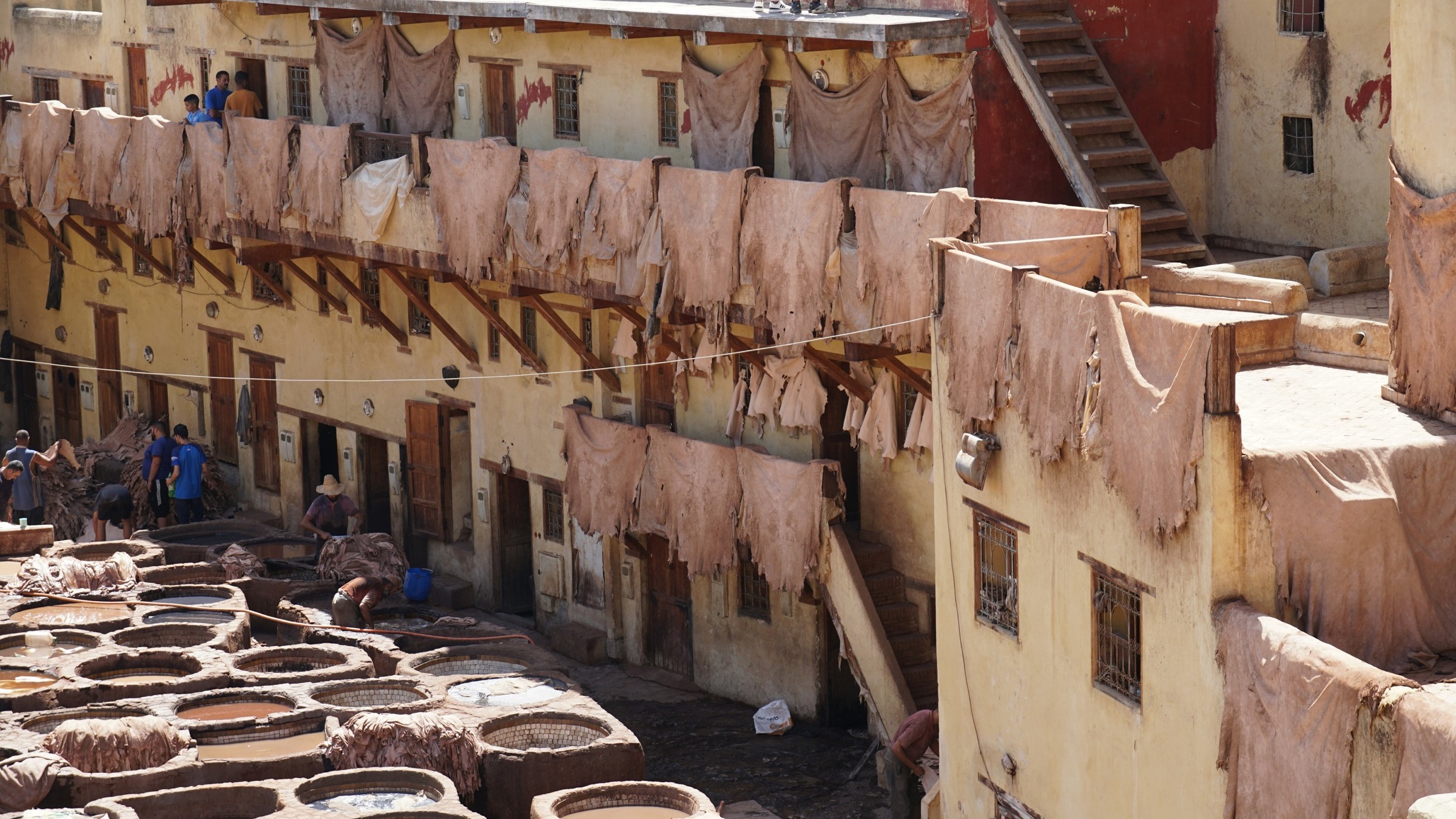
The official rationale rests on two arguments. The first is economic: leather is a by-product of meat and dairy farming, and its weight in the animal's value is marginal, so it is not leather that decides whether a pasture is cleared from forest. The second is practical: tanneries buy hides from slaughterhouses and collectors, often along fragmented international chains, and are in no position to trace the plot of land the animal came from, which is exactly the geolocated data the regulation requires.
A consistency problem also weighed in. Finished leather products, such as bags and footwear, were not listed in the Annex: keeping the material in and the article out would have penalised European tanneries against those who work leather outside the Union and sell the finished product in Europe.
The other products going in and out
The delegated regulation does not cover leather only. Also leaving the scope are conveyor and transmission belts and other vulcanised rubber articles, most retreaded tyres, soybeans for sowing and car and aircraft seats. Coming in are soluble coffee, frozen cattle tongues and some oleochemical palm oil derivatives, but for these the obligation only starts on 30 December 2027.
Cattle remain one of the seven regulated commodities, together with cocoa, coffee, oil palm, rubber, soy and wood. Beef therefore remains subject to due diligence, and the same applies to the wood-derived products that stay in the Annex.
What it means for importers
For those buying tanned leather or finished leather outside the Union, the change is clear-cut: on codes 4101, 4104 and 4107 no due diligence statement will be needed, nor the collection of the farms' geographic coordinates. It is an obligation that had not started yet, since the EUDR applies from 30 December 2026, but many companies were already asking suppliers for data that is no longer legally required.
This does not close the issue. The exclusion concerns the deforestation regulation, not other rules: checks on chemical substances in finished leather remain, as do the traceability requirements many brands include in their specifications. The industry has developed the technical standard EN 18199 on minimum traceability levels, and it is worth asking suppliers whether they apply it.
The useful check, for importers of composite articles, concerns the materials that stay in scope. A product combining leather and wood, or shipped in paper and cardboard packaging, should be checked component by component against the customs codes actually declared, not by its main material.
The 2030 review question
The exclusion is not final. The delegated regulation provides that the Commission will reassess leather's position at the EUDR review scheduled for 2030, based on environmental, economic and trade data. Environmental organisations contest the choice and point out that pasture expansion remains the leading direct cause of deforestation in the Amazon.
The data does not show that leather will return to the regulation, but it signals that the window is a few years long. For those building a leather supply chain today, it is worth not dismantling entirely the origin documentation already collected: it may be needed again.
With La Merce, importers of leather goods from 7 October separate codes 4101, 4104 and 4107, now out of the EUDR, from the wood or paper components that remain in scope, and collect from the supplier only the data actually required.
Sources
Independent checks on the figures cited, verified in-house.
- EUR-Lex — Commission Delegated Regulation (EU) 2026/2102 of 13 July 2026
- Commissione europea — DG Ambiente — Commission updates product scope and tools to support EUDR
- Obsidian Regulatory Intelligence — EU: EUDR Annex I Recast, New Products Apply Dec 2027
- Euroleather (COTANCE) — Leather Out of the EUDR: European Commission Adopts Delegated Act
- Mongabay — Now exempt from EU deforestation rules, leather industry moves to repair reputation
- Lineapelle — Introducing the official CEN standard for traceability in the leather supply chain
Read related articles
EU customs reform: what changes now and what in 2028
The Italian small parcels tax is postponed to 30 November
German import VAT reform: less cash tied up at the port
Digital customs in Norway: with Digitoll, who reports what changes
European preference in public procurement: bids below 50% can be rejected
Steel imports: "melt and pour" traceability starts on 1 October

Steel: EU 50% tariff and new origin rules — what changes for importers
Customs checks on electronics imports: how to avoid penalties and optimise compliance

Import-export of jewellery and precious metals: what Italian law really says

Pinglu Canal: 560 kilometres less to reach the sea
Chinese trucks assembled in Europe: the Steyr plant in Austria

Supply chain risk monitoring: only 20% do it continuously
New Maersk container ships: 26 units delivering from 2029
Costume jewellery imported from China: 49,512 items stopped in Genoa

Italian stone exports: value up, volumes down
Diesel price at 2026 highs: what reaches your deliveries
Suez transits: the return is mostly on voyages back to Asia

European steel protection and the bill for those who transform it

China's electronics five-year plan: 30 trillion yuan by 2030
Four Gemini services return to the Suez Canal: what changes for Ligurian ports
Italian exports in the second quarter of 2026: what the +7.9% really says
Container inspections: deficiencies in more than one unit in ten
Italian hyper-depreciation: confirmation due 60 days after approval

China producer prices are rising: what changes for buyers

Lithium batteries in containers: thousands travel undeclared
Congestion at Chinese ports: ten-day waits before Golden Week

WTO barometer: world trade is growing, but containers fall below trend
Fashion imports from China down 8.1%: what the figure says about suppliers

SVHC substances and importer obligations: the list rises to 253 entries
Hyper-amortisation and foreign machinery: the Made in EU rule is dropped

Chinese exports to Europe: just +6.6% while the rest of the world races ahead

Ten-T corridor delays Italy: Confetra's warning on Brenner and Terzo Valico

Panama Canal draft restrictions: Neopanamax cut postponed

Shanghai-Genoa container rates down 10%: what changes for those importing from China

Demurrage and detention charges disputed: Samsung seeks $186 million from CMA CGM at the FMC

Back to Suez: transits up 36% in August, but the route is only halfway there

China-Europe air cargo: the decline stops, what changes for importers
Goodbye to the €150 exemption: the EU parcel duty rewrites the rules of e-commerce imports
Beyond the electric car: China's new export wave of robots, AI and medicines

Air freight: when cargo takes flight, every detail counts

The Bialetti Moka changes hands: one of Italy's most iconic objects becomes Chinese

MSC is about to buy up ports around the world for 23 billion dollars

How much does China really export? Figures and opportunities of the trade giant

OEM vs ODM: two key acronyms for creating a product under your own brand

The 5 questions we always ask our suppliers

Incoterms: the basics of international trade