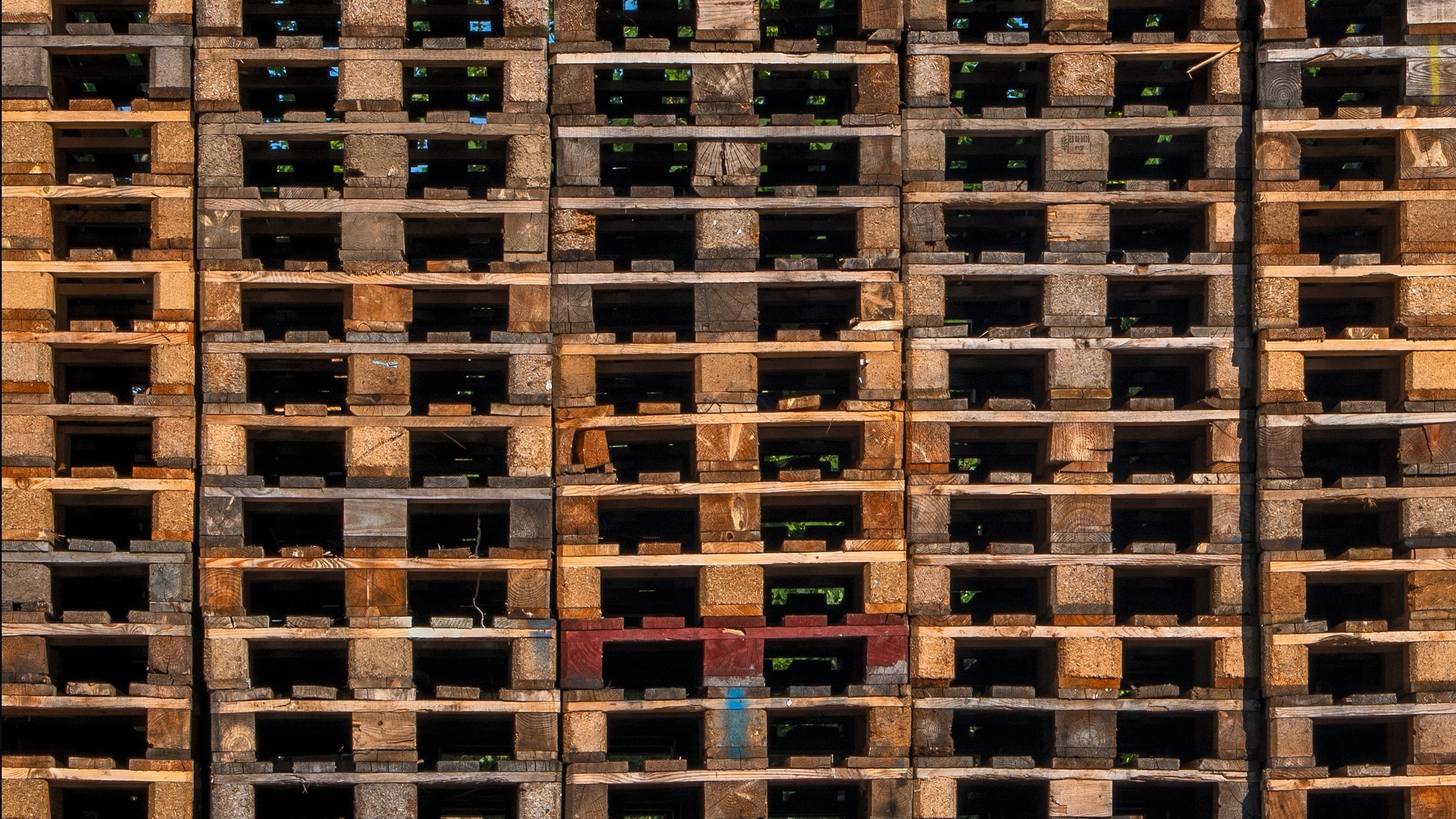
Transport packaging rules and the PPWR: 40% reusable by 2030
MONDAY, 28 SEPTEMBER 2026
For importers the obligation starts at the first European warehouse. Cardboard boxes are excluded, pallets and plastic crates are not.
Transport packaging rules under the PPWR, the EU packaging regulation, require at least 40% of it to be reusable by 2030, and for importers the obligation starts at the first warehouse in the Union where the goods are unloaded. Regulation (EU) 2025/40 has applied since 12 August 2026, and the guidance the Commission published in early June clarified several points that directly concern those who buy outside Europe.
What the PPWR transport packaging rules provide
Article 29 of the regulation sets reuse targets for packaging used to move goods, not to present them to the consumer: pallets, foldable plastic boxes and crates, trays, intermediate bulk containers, pails, drums, canisters, flexible formats, wrapping and straps. The operator using them must ensure that a growing share is reusable and part of a reuse system, meaning it comes back and is used again.
- 12 August 2026: application date of Regulation (EU) 2025/40 on packaging and packaging waste.
- 5 June 2026: the Commission publishes its notice with practical guidance on applying the regulation.
- 40%: the minimum share of reusable transport packaging to be reached by 2030.
- 70%: the 2040 target, worded as a commitment to strive for it rather than a binding result.
- 50%: the maximum empty space in grouped, transport and e-commerce packaging from 1 January 2030, or three years after the act on the calculation method if that comes later.
Who must meet the targets
The obligation falls on the operator that uses the transport packaging and places the product on the Union market: this can be the manufacturer, the importer or the distributor. For sales packaging, the rule applies only where it has an evident transport function, for example through a shape, size or design meant for handling.
The guidance also clarifies the most delicate point for those buying abroad. For goods from third countries the targets apply from the moment of import, that is, from the first warehouse in the Union where the goods arrive, are stored and unpacked before distribution. A shipment sent directly to a single final destination does not need to be repacked; a distribution centre, however, does not count as a final destination.
The exclusions: cardboard, dangerous goods, food
The reuse targets of Article 29 do not apply to packaging used for dangerous goods, to custom packaging for large machinery, to flexible formats in direct contact with food and feed, or to cardboard boxes. For wrapping and straps used to stabilise loads on pallets, Delegated Decision (EU) 2026/429 removed the full-reuse obligations set in certain cases, but these materials remain in the 40% calculation.
The cardboard exclusion is the most relevant for importers of consumer goods and promotional items, which largely arrive in corrugated cardboard cartons. It does not, however, cover the pallets those cartons travel on, nor plastic crates or drums: that is where the 2030 target will be felt.
What it means for importers
The data does not say that every importer must replace its packaging tomorrow: 40% is a 2030 target and the guidance ties the obligation to the first European warehouse, not to the ocean leg. It does signal that transport packaging is entering purchasing specifications, and it is worth raising it with suppliers now, while orders for 2027 and 2028 are being negotiated.
Three concrete checks. Which formats arrive today at the first warehouse: cartons excluded, pallets and plastic crates in scope. Who handles the return of pallets and reusable packaging after unloading, because a reuse system requires someone to take them back. And how much empty space the parcels contain, since the 50% limit from 2030 also covers grouped and transport packaging: generous padding and oversized boxes today cost only in freight, tomorrow in compliance too.
The role of the packing specification
Many companies leave packing to the supplier, who picks the cheapest solution for itself. Under the PPWR that choice has consequences for whoever places the goods on the European market, so it pays to make the packing specification part of the order: material, carton size relative to the product, pallet type and what happens to it after unloading.
With La Merce, an order imported from 2026 starts with the packing specification agreed at the factory: corrugated cardboard where possible, empty space below 50% and pallets designed for reuse from the first European warehouse onwards.
Sources
Independent checks on the figures cited, verified in-house.
Read related articles

Costume jewellery imported from China: 49,512 items stopped in Genoa
Container inspections: deficiencies in more than one unit in ten

Lithium batteries in containers: thousands travel undeclared

SVHC substances and importer obligations: the list rises to 253 entries
Supplier assessment: only those meeting the highest standards of quality, safety and sustainability

US-China tariffs cut on 30 billion: what changes for buyers in China

Sicily truck stoppage from 16 to 20 October: how to protect deliveries

Industrial robots in China: 354,000 installed in 2025, 59% of the world

Leather excluded from the EUDR: what changes for importers from 7 October

Pinglu Canal: 560 kilometres less to reach the sea
Chinese trucks assembled in Europe: the Steyr plant in Austria

Supply chain risk monitoring: only 20% do it continuously

EU customs reform: what changes now and what in 2028

New Maersk container ships: 26 units delivering from 2029

Italian stone exports: value up, volumes down
Diesel price at 2026 highs: what reaches your deliveries
Suez transits: the return is mostly on voyages back to Asia

European steel protection and the bill for those who transform it
The Italian small parcels tax is postponed to 30 November

China's electronics five-year plan: 30 trillion yuan by 2030

German import VAT reform: less cash tied up at the port
Four Gemini services return to the Suez Canal: what changes for Ligurian ports
Italian exports in the second quarter of 2026: what the +7.9% really says

Digital customs in Norway: with Digitoll, who reports what changes
Italian hyper-depreciation: confirmation due 60 days after approval

China producer prices are rising: what changes for buyers

European preference in public procurement: bids below 50% can be rejected

Congestion at Chinese ports: ten-day waits before Golden Week

WTO barometer: world trade is growing, but containers fall below trend
Fashion imports from China down 8.1%: what the figure says about suppliers
Hyper-amortisation and foreign machinery: the Made in EU rule is dropped

Chinese exports to Europe: just +6.6% while the rest of the world races ahead

Ten-T corridor delays Italy: Confetra's warning on Brenner and Terzo Valico

Panama Canal draft restrictions: Neopanamax cut postponed

Shanghai-Genoa container rates down 10%: what changes for those importing from China

Demurrage and detention charges disputed: Samsung seeks $186 million from CMA CGM at the FMC

Back to Suez: transits up 36% in August, but the route is only halfway there
Steel imports: "melt and pour" traceability starts on 1 October

China-Europe air cargo: the decline stops, what changes for importers

Goodbye to the €150 exemption: the EU parcel duty rewrites the rules of e-commerce imports
Beyond the electric car: China's new export wave of robots, AI and medicines

Steel: EU 50% tariff and new origin rules — what changes for importers

Air freight: when cargo takes flight, every detail counts

Customs checks on electronics imports: how to avoid penalties and optimise compliance

The Bialetti Moka changes hands: one of Italy's most iconic objects becomes Chinese

MSC is about to buy up ports around the world for 23 billion dollars

Import-export of jewellery and precious metals: what Italian law really says

How much does China really export? Figures and opportunities of the trade giant

OEM vs ODM: two key acronyms for creating a product under your own brand

The 5 questions we always ask our suppliers