NNN agreement China: what it covers and how to protect your designs with suppliers
SATURDAY, 14 NOVEMBER 2026
Before sending drawings and prototypes to a Chinese factory you need a non-disclosure, non-use and non-circumvention agreement: Chinese language, law and court, the company seal, the penalty and the 30% rule, and a trademark filed in China.
NNN agreement China: it is the contract you sign with a Chinese supplier before showing it drawings, prototypes or specifications, and it covers three commitments: no disclosure, no use and no circumvention. It only works if it is written in Chinese, governed by Chinese law, stamped by the right company and backed by a penalty that a Chinese judge can apply.
Anyone who develops their own product, a custom promotional item or a component made to drawing and has it manufactured in China hands the most valuable part of the work to the factory. This guide explains what an NNN agreement covers, why an ordinary confidentiality agreement is not enough, which clauses matter, how a penalty is enforced, why the trademark should be registered in China before ordering and what the agreement does not solve. At the end there is an example with numbers and a checklist.
NNN agreement China: what the three Ns mean
NNN stands for non-disclosure, non-use and non-circumvention. The three parts protect different things:
- non-disclosure: the factory cannot pass drawings, samples, price lists and project information to third parties;
- non-use: the factory cannot use that information for itself, for example to make and sell the same item under another brand;
- non-circumvention: the factory cannot go around the client by dealing directly with the customers, distributors or suppliers it met through the project.
The agreement is signed before sharing anything important: technical drawings, prototypes, samples, and also requests for quotation built on the drawings. For the first supplier screening, use generic information that does not reveal the product. If a factory refuses to sign before seeing the project, it is worth asking why.
Why a confidentiality agreement is not enough
A European-style confidentiality agreement (NDA) mainly prohibits revealing information to third parties. With a factory the main risk is a different one: that it uses the project on its own account. To do that it does not need to tell anyone anything; it just has to make the same item, or a slightly modified version, and sell it to another client or in markets the buyer has not reached yet.
This is why law firms working with China consider non-use and non-circumvention more important than non-disclosure. An NDA translated into Chinese covers only part of the problem. There is also a drafting limit: if the ban only covers identical copies, changing one dimension or detail is enough to claim it is a different product. The description of what is protected must therefore be drafted carefully, without putting the secrets themselves into the text of the agreement.
Law, language and court: where it is enforced
A contract is useful if it can be enforced where the other party has its assets, and a Chinese factory has its plants, bank accounts and warehouses in China. Advisers in this field agree on three points:
- language: the agreement is prepared in Chinese and in Italian or English, but only one version prevails, usually the Chinese one, because a Chinese judge would work from that text anyway;
- law: Chinese law, so the judge does not have to apply a foreign law;
- forum: a Chinese court with jurisdiction over the factory's seat, or an arbitration agreed in advance.
An Italian judgment, by contrast, would first have to be recognised in China through a separate proceeding with an uncertain outcome. Arbitration is an often faster alternative. China has applied the New York Convention on the recognition of foreign arbitral awards since 22 April 1987, with two reservations: it covers awards made in another contracting state and disputes that Chinese law considers commercial.
Who signs: Chinese name and company seal
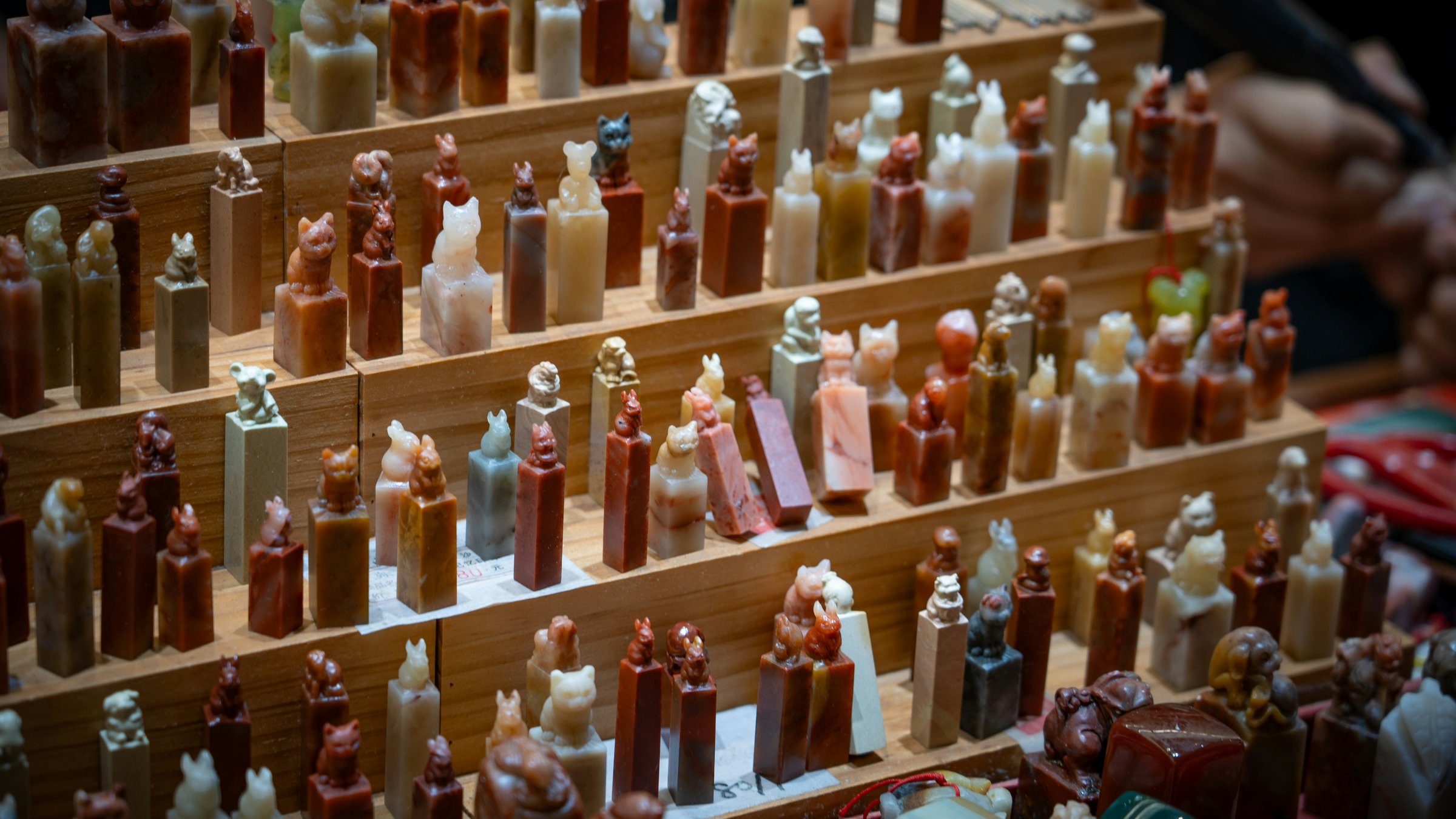
In China a contract signed by an individual without the company's official seal (the chop) can cause serious problems when you try to enforce it. The seal alone is not enough, though: the contracting party must be the right company, identified by its registered name in Chinese characters and its address, and the signatory must have the power to sign.
The typical case is the sales agent or trading company acting as an intermediary: an agreement signed with them does not bind the factory that actually produces. Before signing it is therefore worth checking which company will really manufacture, and making sure the name on the seal matches the contracting party.
The penalty: how much you can ask for
Proving how much you lost because a factory sold your product to others is difficult. This is why an NNN agreement sets a penalty, that is an amount or a calculation method agreed in advance. The Chinese Civil Code allows this in Article 585, but it also provides that, if the penalty is excessively higher than the loss, the court or arbitrator may reduce it at the request of a party.
The threshold was clarified by the Supreme People's Court in its interpretation of the general part of contract law published in December 2023 (Fa Shi 2023 No. 13). Under Article 65, a penalty that exceeds the loss caused by more than 30% can generally be considered excessive. It is not an automatic cap: the judge also weighs how the contract was performed and the fault of the parties, and the same rule treats bad-faith breach separately. A disproportionate figure weakens the clause instead of strengthening it, while a figure that is too low becomes a mere cost of doing business for the factory.
Register the trademark in China before ordering
The NNN agreement protects information, not the trademark. In China trademarks follow the first-to-file principle: the right generally goes to whoever files first, and a registration in Italy or the European Union gives no rights in China. The risk also exists for companies that manufacture in China without selling there: a third party registering the mark can cause problems for production and outbound shipments, and the filer is sometimes a person linked to the factory.
Some useful figures for planning:
- registration term: 10 years, renewable;
- timing: for an application without oppositions, usually a year or a little more;
- new trademark law: in force from 1 January 2027, it cuts the opposition period after publication from three to two months;
- classes: the Chinese office divides the 45 international classes into subgroups, so the application must be built around the actual products.
If the brand will also be used in Chinese characters, that version must be registered as well. The NNN agreement should also provide that any filing made by the factory on the buyer's trademarks, designs or patents is transferred to the buyer.
What the NNN agreement does not solve
An NNN agreement is the first step, not the whole contract. It does not establish who owns the moulds and tooling paid for by the client, nor how they are stored, used or returned: those rules belong in the manufacturing contract or in a tooling agreement. It does not set quality, delivery times or acceptance tests. It has no standard duration: the term is chosen according to the life of the product, how quickly the technology ages and the expected length of the relationship, bearing in mind that much information stays confidential after supply ends.
As a rule the agreement is not mutual: it protects whoever brings the project. If the factory also contributes its own technical development, a product development agreement is needed to state who owns the result. For initial guidance, European small and medium-sized companies can turn to the European Commission's China IP SME Helpdesk, which offers free and confidential advice and, according to its website, replies within 3 working days.
An example with numbers
The example is hypothetical. An Italian company designs a thermal bottle with a patentable cap and wants to have it made in China. Before sending the drawings it signs with the factory an NNN agreement in Chinese, governed by Chinese law, with jurisdiction at the court of the city where the factory is based and the seal of the company that will produce. The penalty is set at 300,000 yuan per breach.
A year later the same bottle appears in the factory's catalogue under another brand. The company takes action in China and claims the penalty. If the factory proves that the actual loss was 200,000 yuan, the 30% threshold brings the figure to 260,000 yuan: the agreed 300,000 exceeds it and the judge may reduce the amount, also considering whether the breach was in bad faith. Without an agreement, the company would have had to prove the loss and the breach from scratch, holding a contract that is hard to enforce.
Checklist before sending the drawings
- screen suppliers with generic information, without drawings;
- verify the Chinese registered name of the company that will really manufacture;
- sign the NNN agreement before sending any drawings, samples or detailed requests for quotation;
- Chinese text prevailing, Chinese law, court or arbitration specified;
- penalty proportionate to the possible loss;
- clause transferring any filings by the factory on trademarks and designs;
- trademark filed in China, also in Chinese characters if needed;
- separate manufacturing contract and tooling agreement.
With La Merce, a custom product project starts with an NNN agreement stamped by the factory that will actually make it, in Chinese and with the penalty set, before drawings and samples leave Italy.
Sources
Independent checks on the figures cited, verified in-house.
- IPWatchdog — Understanding 'NNN' Agreements in China
- Harris Sliwoski — China NNN Agreements: What They Do, What They Don't, and How to Get Them Right
- Conventus Law — Writing A Good Manufacturing Non-disclosure Agreement In China
- China Securities Journal — Interpretazione della Corte suprema del popolo sulla parte generale dei contratti (Fa Shi 2023 n. 13)
- Zhong Lun — Commento all'interpretazione sulla parte generale dei contratti del Codice civile (parte 3)
- The Paper (Tribunale di Minhe) — Penale troppo alta, il tribunale la riduce (art. 585 Codice civile)
- WIPO — Convention on the Recognition and Enforcement of Foreign Arbitral Awards: China
- Conventus Law (AnJie Law Firm) — Overview: Recognizing And Enforcing Foreign Arbitral Awards In China
- Harris Sliwoski — China Trademark Registration: How to Stop Squatters from Stealing Your Brand
- Intepat — Trademark Registration in China: Filing Strategy, Procedure, Costs, and the 2026 Trademark Law Reform
- Wikipedia — Trademark law of China
- Commissione europea — China IP SME Helpdesk
Read related articles

JD.com Ceconomy acquisition completed: 59.8% stake for 1,335 million euros

Chinese exports up 35.2% in October, surplus above 1 trillion dollars

Italy trade with China: imports down 12.3% in September
Vietnam manufacturing PMI at 52.3 in October, but export orders fall

Letter of credit meaning: how it works, types, costs and documents

Canton Fair phase 3: toys, fashion and stationery from 31 October
China trade secrets law: Beijing drafts six measures against foreign firms
MOQ meaning: what minimum order quantity is and how to negotiate it
Canton Fair phase 2 opens: home goods and gifts, 23 to 27 October

Private label meaning: how it works, advantages and risks for importers
Supplier payment terms in Italy: only 42.3% paid on time, and 30.5% rely on one customer

China GDP growth 2026: 4.5% in the third quarter, consumption stuck at 1.1%
EU safeguard measures: Chinese chemicals and machinery targeted after the summit

How to find reliable suppliers in China: five channels and how to spot a real factory

Canton Fair 2026 opens with 32,000 exhibitors, running until 4 November

China trade surplus: exports up 36.3% in September, surplus with the EU at 34.8 billion
China export tax rebate: electric vehicles cut to 9% from 2027, e-cigarettes out
Critical raw materials strategic projects: the EU picks 46, five in Italy

How to import from China to Europe: a step-by-step guide for businesses
After Golden Week: what to expect from Chinese factories and shipping

Sourcing by Italian SMEs: 86% domestic, but non-EU rises to 22%

Extra-EU imports in August: +17.2%, from China +16%

US-China tariffs cut on 30 billion: what changes for buyers in China

Supply chain risk monitoring: only 20% do it continuously
Italian stone exports: value up, volumes down
Italian exports in the second quarter of 2026: what the +7.9% really says

China producer prices are rising: what changes for buyers
WTO barometer: world trade is growing, but containers fall below trend
Fashion imports from China down 8.1%: what the figure says about suppliers
Chinese exports to Europe: just +6.6% while the rest of the world races ahead
Beyond the electric car: China's new export wave of robots, AI and medicines

How much does China really export? Figures and opportunities of the trade giant

The 5 questions we always ask our suppliers
Robot density: Italy at 246 per 10,000 employees, Germany at 469
Road freight rates in Italy 2026: +6.4% on contracts, rising even without diesel

Italy packaging EPR: CONAI rules, 2026 rates and deadlines for importers

Steel imports from Turkey: 5 million euros of rolled steel seized in Naples
Hapag-Lloyd: average freight rate at 1,808 dollars per TEU, up 28% in Q3

AQL inspection: how to read the table, inspection levels and acceptance numbers
Customs fraud on Chinese wind towers: 500,000 euros recovered
Italy industrial production: up 1.2% in September, consumer goods down 3%

Marine cargo insurance: clauses A, B and C and carrier liability limits

Italy road haulage decree: from 24 October the diesel share goes on invoices and contracts

Food contact materials regulation: rules, declaration of compliance and symbol

Container shipping demand in 2027: growth of 2.5-4%, fleet up 6.8%
China factory gate prices up 5.7% in October, consumer goods flat
Customs value of imported goods: how to calculate it, what to add and what to leave out

Container transhipment: ETS-linked changes in 41 of 86 services, study says

Polyether polyols from China: imports registered, retroactive duties possible
GPSR regulation: importer obligations, the responsible person and penalties in Italy

Air cargo market in October: demand up 6%, the shift back to ocean from 2027
China anti dumping EU: Beijing probes European para-aramid
CBAM regulation: how it works, the 50 tonne threshold, certificates and deadlines for importers
Container shipping delays: Asia-Mediterranean services 71% more unstable
Deindustrialization in Europe: Confindustria, BDI and Medef call for safeguards beyond steel
REACH regulation: what it is, importer obligations, restrictions and penalties
Ocean freight rates 2026: Maersk at 3,287 dollars per container, up 46%
EU Indonesia trade agreement: GSP preferences end on 1 January 2027

T1 transit document: what it is, how EU customs transit works and T1 vs T2
China steel production down 2.9% in nine months, but demand falls faster
Customs warehouse: what it is, how it works, types and the difference with a VAT warehouse
Italy 2 euro tax on small parcels: the 2027 budget scraps it

Commercial invoice for customs: what it must contain and how it differs from a proforma

Italy labeling requirements: 337,000 Halloween items seized in Brescia
South Korea exports in October: 115 billion dollars, chips up 259%
Anti dumping duties EU: what they are, how they work and how to calculate them
Italy air cargo in September: Malpensa down 7.9%
China factory activity at 49.3 in October: export orders fall

Packing list meaning: contents, how to fill it in and an example

EU tariffs on Chinese goods: safeguards now extend to furniture
Container ship orderbook at 46.5% of the fleet, the highest since 2009
Parcels from China: e-commerce air volumes to the EU halved in September

Bill of lading meaning: how it works, types and the electronic B/L

China port throughput: containers up 4.5% in nine months, Shanghai sets a September record

Italy small parcel tax: postponed again to 1 January 2027
LCL vs FCL from China: thresholds, transit times and risks
China five-year plan: 22 tasks for core components and materials by 2030
Suez Canal shipping route: 70% of Asia-Mediterranean capacity is back
China electronics manufacturing up 15.8% in nine months, profits doubled
Counterfeit goods seized in Italy: over 5 million items in 2025, toys top the list

China to Europe shipping time: sea, rail and air door to door to Italy
Port of Trieste: containers up 22.3% in the third quarter, but trains down 14%
Import VAT EU: taxable base, deferral, deduction and VAT ceiling in Italy
Dual-use export controls: China requires licences for tunnel boring machines and drone parts from 18 November
Preferential and non preferential certificate of origin: differences, EUR.1 and chamber of commerce
Chinese battery storage: output up 110% to over 420 GWh in six months

Port of Rotterdam container throughput: full imports up 8.9%, transhipment down 20%

TARIC code lookup: the 10 digits, the EU database and Binding Tariff Information

Ocean freight rates rebound: Shanghai-Genoa up 7% after 13 weeks of decline
Customs clearance in Italy for goods from China: how it works, the documents and the customs entry
China export controls: 14 technologies to be banned in AI, biotech and solar

EU ETS shipping: carriers buy almost 20% of EU allowances
China rare earth exports: 4,270 tonnes in September, faster EU licences

EORI number Italy: what it is, how to get one and how to check it before your first import
China producer prices up 5% in September, the fastest since 2022

Import duty from China to EU: how to calculate it, with a worked example

Container ship delays: only 4% on time from Asia to Europe in September
How to get CE marking: the steps and the importer's obligations
EU China trade deal: fewer hybrids and lower tariffs on €4 billion
Container cost from China to Europe: every cost item and a worked example

Trademark registration grant: Italy's Marchi+ 2026 refunds up to 9,000 euros per trademark abroad
World trade forecast: WTO raises 2026 goods growth to 3.9%
Truck stoppage in Calabria and Sicily: deliveries at risk from 9 to 20 October
China's battery plan: parts-per-billion defects by 2030
Air cargo in September: demand +6% and ever shorter contracts
Hyper-depreciation or tax credits: what the UPB says about machinery incentives
China's manufacturing PMI at 50.1: factory costs and prices rise

European 301 tool against China: what we know and what we don't

Asia-Europe container rates: twelve weeks of decline, Shanghai-Genoa at 3,702 dollars

Container connectivity at Italian ports: Genoa, Gioia Tauro and La Spezia decline
Digital DeCA in Spain from 5 October: what changes for road freight
Industrial profits in China: +15.7%, but clothing and furniture fall
Sicily truck stoppage from 16 to 20 October: how to protect deliveries
Transport packaging rules and the PPWR: 40% reusable by 2030
Industrial robots in China: 354,000 installed in 2025, 59% of the world
Leather excluded from the EUDR: what changes for importers from 7 October

Pinglu Canal: 560 kilometres less to reach the sea
Chinese trucks assembled in Europe: the Steyr plant in Austria

EU customs reform: what changes now and what in 2028
New Maersk container ships: 26 units delivering from 2029
Costume jewellery imported from China: 49,512 items stopped in Genoa
Diesel price at 2026 highs: what reaches your deliveries
Suez transits: the return is mostly on voyages back to Asia
European steel protection and the bill for those who transform it
The Italian small parcels tax is postponed to 30 November

China's electronics five-year plan: 30 trillion yuan by 2030
German import VAT reform: less cash tied up at the port
Four Gemini services return to the Suez Canal: what changes for Ligurian ports
Container inspections: deficiencies in more than one unit in ten
Digital customs in Norway: with Digitoll, who reports what changes
Italian hyper-depreciation: confirmation due 60 days after approval

European preference in public procurement: bids below 50% can be rejected

Lithium batteries in containers: thousands travel undeclared
Congestion at Chinese ports: ten-day waits before Golden Week

SVHC substances and importer obligations: the list rises to 253 entries
Hyper-amortisation and foreign machinery: the Made in EU rule is dropped

Ten-T corridor delays Italy: Confetra's warning on Brenner and Terzo Valico

Panama Canal draft restrictions: Neopanamax cut postponed

Shanghai-Genoa container rates down 10%: what changes for those importing from China

Demurrage and detention charges disputed: Samsung seeks $186 million from CMA CGM at the FMC

Back to Suez: transits up 36% in August, but the route is only halfway there
Steel imports: "melt and pour" traceability starts on 1 October
China-Europe air cargo: the decline stops, what changes for importers
Goodbye to the €150 exemption: the EU parcel duty rewrites the rules of e-commerce imports
Steel: EU 50% tariff and new origin rules — what changes for importers
Air freight: when cargo takes flight, every detail counts
Customs checks on electronics imports: how to avoid penalties and optimise compliance
The Bialetti Moka changes hands: one of Italy's most iconic objects becomes Chinese

MSC is about to buy up ports around the world for 23 billion dollars

Import-export of jewellery and precious metals: what Italian law really says
OEM vs ODM: two key acronyms for creating a product under your own brand

Incoterms: the basics of international trade