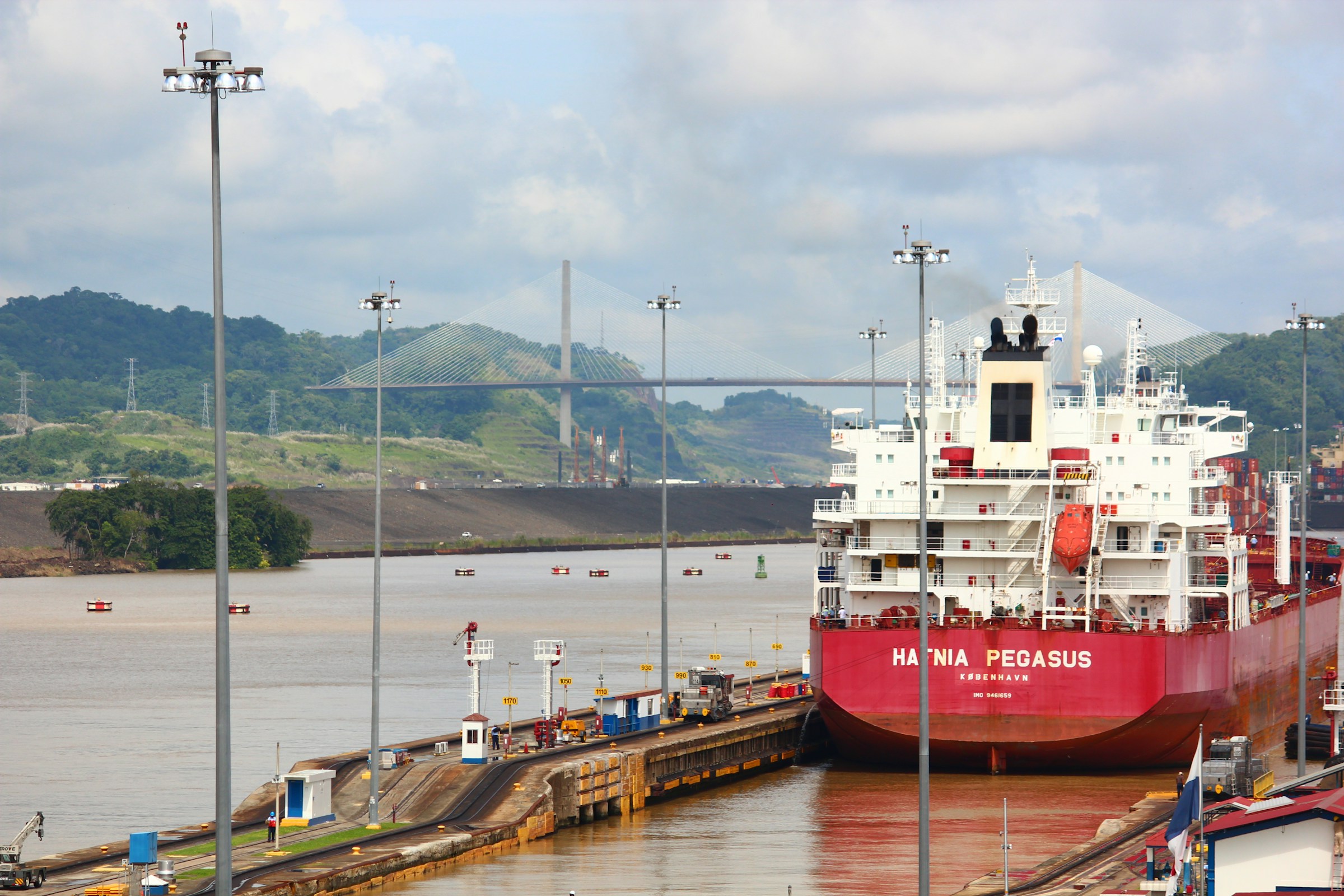
Panama Canal draft restrictions: Neopanamax cut postponed sulle chiuse Neopanamax
THURSDAY, 10 SEPTEMBER 2026
The Panama Canal authority has postponed indefinitely the reduction of maximum draft to 14.48 metres due on 1 October: the current 14.63-metre tropical fresh water limit stays in force.
Panama Canal draft restrictions announced for 1 October will not take effect. The authority managing the waterway has postponed indefinitely the cut to the maximum draft allowed through the Neopanamax locks, a measure decided to cope with the drought linked to El Niño.
Panama Canal draft restrictions: what stays in force from 1 October
In practice, the current limit of 14.63 metres TFW remains applicable, a figure referred to tropical fresh water, which is less dense than ocean water and therefore provides less buoyancy. The move to the 14.48-metre threshold, which was due to start on 1 October, is frozen with no new date.
In a notice sent to shipowners, agents and shipping lines, the operators explained that the reversal follows the latest assessment of Gatun Lake levels, the reservoir feeding the locks, and of updated weather forecasts.
The numbers behind the decision
- Maximum draft in force: 14.63 metres TFW, confirmed beyond 1 October.
- Postponed threshold: 14.48 metres, i.e. 15 centimetres less, due from 1 October and now undated.
- Daily transits from 3 September: 9 slots for the Neopanamax locks and 25 for the Panamax ones.
- Next deadline set: from 15 September Panamax slots fall from 25 to 23 per day.
Transit slots: the rationing is not stopping
The announcement concerns draft only. On the second front, the number of daily passages, the authority has not changed course: the schedule already set remains in place. Since 3 September the Neopanamax locks have been working with 9 transits a day and the Panamax locks with 25, and from 15 September the latter drop to 23. The distinction matters: the postponement protects the loading capacity of each individual ship, not the number of ships that can pass.
What it means for importers and exporters
For an Italian shipper moving goods from Asia to the US East Coast, or towards the Gulf of Mexico and the Caribbean, the gap between 14.63 and 14.48 metres is not theoretical. Every centimetre of draft lost means tonnage left ashore: carriers cut the number of full containers loaded, favour lighter boxes and, when the restriction becomes entrenched, introduce so-called draft or canal surcharges, charges that end up on the freight invoice and are rarely negotiable once published. The postponement therefore pushes back, for now, both stowage cuts and the risk of extra fees.
Timing, however, remains an issue. With 9 Neopanamax slots a day and a gradual reduction of Panamax ones, waiting queues at anchor and the slot auction market are not going away: transit time can stretch even when the ship is fully loaded, and anyone working with contractual delivery dates needs to build a buffer into their calendars. Shippers with cargo departing in the coming weeks would do well to ask their carrier or forwarder for written confirmation of the chosen routing, checking whether it involves the Canal or the alternative detour, and to review contract clauses allowing waterway-related surcharges.
How to plan the coming weeks
The postponement is a technical truce, not a solution. The authority has already shown it can revise operating parameters when Gatun Lake levels change, so the 14.48-metre threshold may return to the agenda with a new advisory. Anyone with shipments to the United States east coast in the coming weeks should ask the carrier for written confirmation of the routing, check the contract clauses that allow waterway-related surcharges, and build a buffer into delivery dates: slot rationing remains in force even now that the draft is unchanged.
With La Merce, shipping to the United States east coast means knowing in advance whether the chosen routing goes through the Panama Canal and which contract clauses open the door to a draft surcharge: those terms are checked with the forwarder before the draft limit returns to the agenda, not after.
Sources
Independent checks on the figures cited, verified in-house.
Read related articles
Congestion at Chinese ports: ten-day waits before Golden Week

Ten-T corridor delays Italy: Confetra's warning on Brenner and Terzo Valico

Shanghai-Genoa container rates down 10%: what changes for those importing from China

Demurrage and detention charges disputed: Samsung seeks $186 million from CMA CGM at the FMC

Back to Suez: transits up 36% in August, but the route is only halfway there
China-Europe air cargo: the decline stops, what changes for importers

Goodbye to the €150 exemption: the EU parcel duty rewrites the rules of e-commerce imports
Air freight: when cargo takes flight, every detail counts
MSC is about to buy up ports around the world for 23 billion dollars

Incoterms: the basics of international trade
Italian hyper-depreciation: confirmation due 60 days after approval

China producer prices are rising: what changes for buyers
European preference in public procurement: bids below 50% can be rejected

Lithium batteries in containers: thousands travel undeclared
WTO barometer: world trade is growing, but containers fall below trend
Fashion imports from China down 8.1%: what the figure says about suppliers

SVHC substances and importer obligations: the list rises to 253 entries
Hyper-amortisation and foreign machinery: the Made in EU rule is dropped

Chinese exports to Europe: just +6.6% while the rest of the world races ahead
Steel imports: "melt and pour" traceability starts on 1 October

Beyond the electric car: China's new export wave of robots, AI and medicines
Steel: EU 50% tariff and new origin rules — what changes for importers
Customs checks on electronics imports: how to avoid penalties and optimise compliance

The Bialetti Moka changes hands: one of Italy's most iconic objects becomes Chinese

Import-export of jewellery and precious metals: what Italian law really says
How much does China really export? Figures and opportunities of the trade giant
OEM vs ODM: two key acronyms for creating a product under your own brand

The 5 questions we always ask our suppliers