German import VAT reform: less cash tied up at the port
WEDNESDAY, 16 SEPTEMBER 2026
La Conferenza dei ministri delle Finanze ha deciso il 10 settembre, ma il modello parte nel 2030. Fra la decisione e l’applicazione passano più di tre anni.
The German import VAT reform changes the method: no more payment to customs for businesses with full right of deduction. It is a cash measure, not a tax cut, and it does not take effect before 2030.
The German import VAT reform: what has been decided
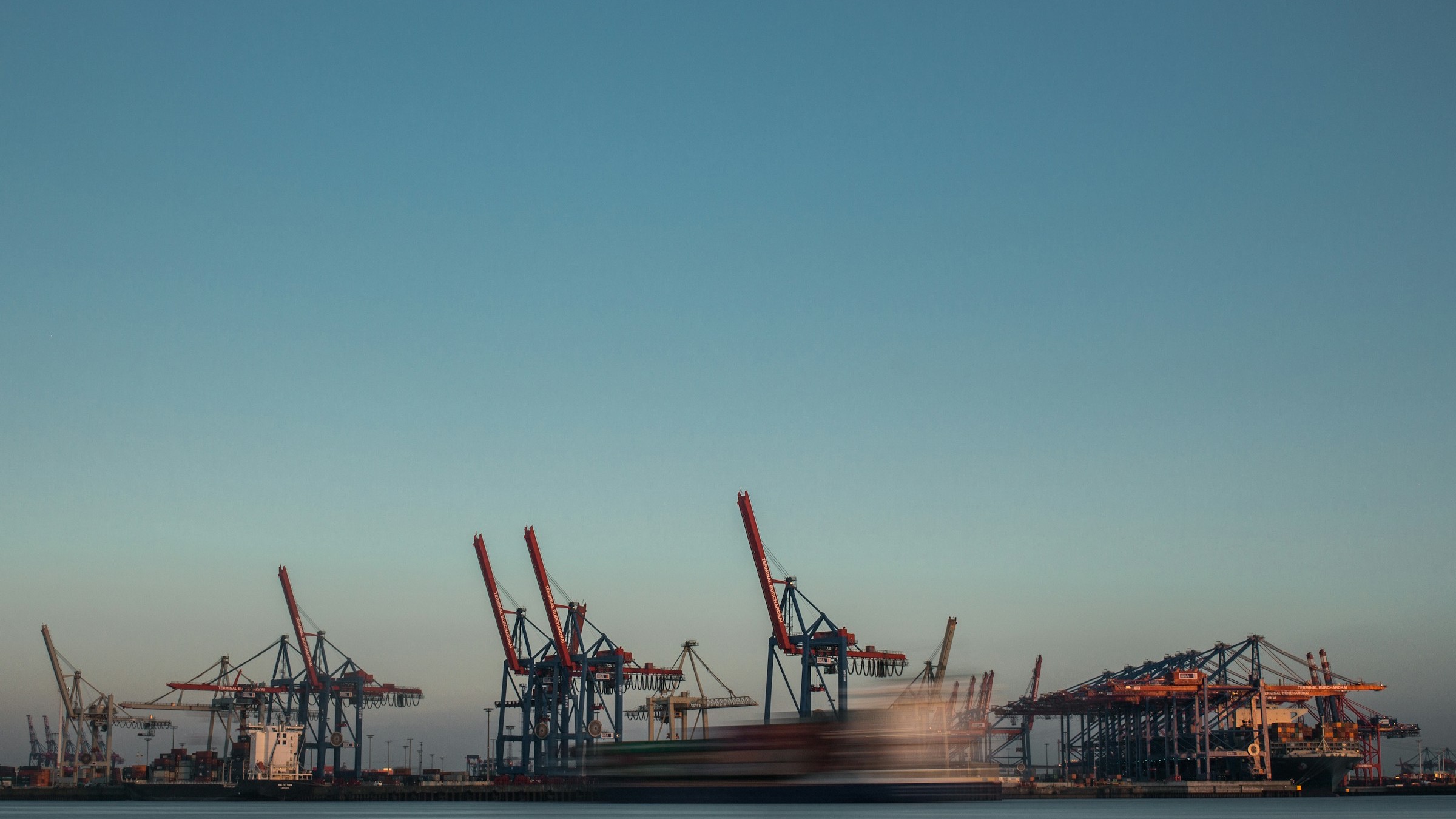
The Conference of Finance Ministers of the Länder has approved the introduction of an offsetting model for value added tax on imports. The association of German seaport terminal operators welcomed it as a long-awaited step.
- Decision by the Conference of Finance Ministers: 10 September 2026
- Planned start of the new model: 1 January 2030
- Gap between the decision and its application: more than three years
- Year in which the same Conference had already recognised the need for the model: 2024
- Payment to customs required under the new model for those deducting in full: none
Today in Germany a company importing from a non-EU country pays the tax to the customs authority and recovers it later, with its periodic return. Under the offsetting model the tax will be entered in the return and simultaneously deducted as input tax, without money leaving.
It is not a discount, it is a matter of timing
Here it is worth being precise, because the news is easily read as a tax advantage and it is not one.
For a company that deducts VAT in full, import tax is already neutral in cost terms: what is paid is recovered. What is not neutral is the financial side. Between payment at customs and recovery, time passes, and during that time capital stays tied up. The offsetting model removes the outflow, it does not reduce the tax.
The difference sounds formal and is not: anyone calculating the benefit as a percentage of the value of the goods has the wrong order of magnitude. The benefit is the cost of money on the amount, for the number of days it sits still. On thin margins and high volumes it can count; on an occasional shipment barely at all.
The competitive argument, and how to weigh it
The German port association argues that the current rule penalises national terminals against European competitors, where import tax is offset directly against the credit.
It is a legitimate argument and should be attributed to whoever makes it: it is the position of an interested party, not an independent measure of how much traffic would shift. That pre-financing is a cost is a fact; how much it weighs in choosing a port against delivery times, frequencies, inland connections and handling tariffs is another question, and on that the statement brings no figures.
Then there is the calendar, the least commented and most concrete part: more than three years pass between the decision and its application. Anyone choosing a port of discharge today does so under today's rules.
What to look at now
The first point is to measure rather than estimate. It is worth calculating what the tax advanced at customs actually costs you: average amount per shipment, days before recovery, your company's cost of money. It is a calculation done once, and it tells you whether the subject concerns you at all.
The second concerns the tools already available in Italy. Regimes exist that move the moment the tax is paid — the VAT warehouse is the best known — and the right question for your adviser is not whether they exist, but whether your operations qualify and on what conditions.
The third is a caution on logistics choices. A rule taking effect in 2030 is not a reason to change port of discharge now. It is worth noting among the factors to review when it arrives, and meanwhile deciding on the parameters that count today.
With La Merce, following the German import VAT reform means telling a cash-flow advantage apart from a tax discount and measuring what it is worth to you, instead of waiting for a rule that takes effect more than three years from now.
Sources
Independent checks on the figures cited, verified in-house.
- Haufe — Verrechnungsmodell bei der Einfuhrumsatzsteuer
- Forvis Mazars — Import VAT offset model in Germany explained
- DIHK — Einfuhrumsatzsteuer: BMF stellt Eckpunkte eines Verrechnungsmodells vor
- EY — BMF: Optimierung des Erhebungsverfahrens der Einfuhrumsatzsteuer
- HANSA — Die Reform der Einfuhrumsatzsteuer kommt
Read related articles
Digital customs in Norway: with Digitoll, who reports what changes
European preference in public procurement: bids below 50% can be rejected
Steel imports: "melt and pour" traceability starts on 1 October

Steel: EU 50% tariff and new origin rules — what changes for importers
Customs checks on electronics imports: how to avoid penalties and optimise compliance

Import-export of jewellery and precious metals: what Italian law really says
China's electronics five-year plan: 30 trillion yuan by 2030
Four Gemini services return to the Suez Canal: what changes for Ligurian ports
Italian exports in the second quarter of 2026: what the +7.9% really says
Container inspections: deficiencies in more than one unit in ten
Italian hyper-depreciation: confirmation due 60 days after approval

China producer prices are rising: what changes for buyers

Lithium batteries in containers: thousands travel undeclared
Congestion at Chinese ports: ten-day waits before Golden Week
WTO barometer: world trade is growing, but containers fall below trend
Fashion imports from China down 8.1%: what the figure says about suppliers

SVHC substances and importer obligations: the list rises to 253 entries
Hyper-amortisation and foreign machinery: the Made in EU rule is dropped
Chinese exports to Europe: just +6.6% while the rest of the world races ahead

Ten-T corridor delays Italy: Confetra's warning on Brenner and Terzo Valico

Panama Canal draft restrictions: Neopanamax cut postponed

Shanghai-Genoa container rates down 10%: what changes for those importing from China

Demurrage and detention charges disputed: Samsung seeks $186 million from CMA CGM at the FMC

Back to Suez: transits up 36% in August, but the route is only halfway there
China-Europe air cargo: the decline stops, what changes for importers
Goodbye to the €150 exemption: the EU parcel duty rewrites the rules of e-commerce imports
Beyond the electric car: China's new export wave of robots, AI and medicines
Air freight: when cargo takes flight, every detail counts

The Bialetti Moka changes hands: one of Italy's most iconic objects becomes Chinese

MSC is about to buy up ports around the world for 23 billion dollars

How much does China really export? Figures and opportunities of the trade giant
OEM vs ODM: two key acronyms for creating a product under your own brand

The 5 questions we always ask our suppliers

Incoterms: the basics of international trade